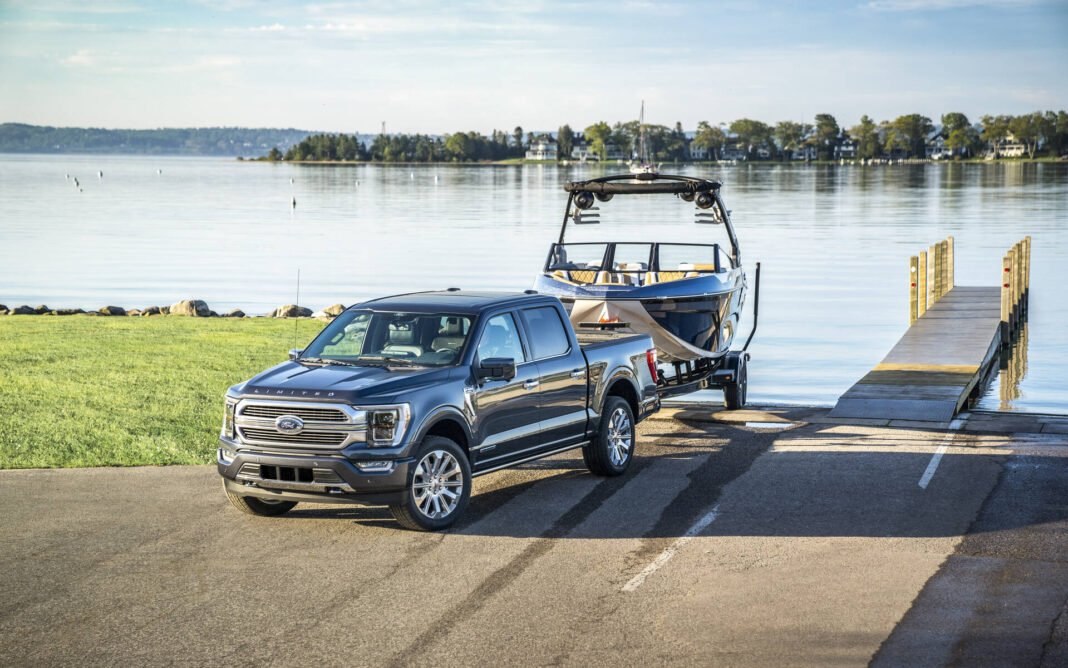
Towing a boat to the lake or hauling a recreational trailer for a weekend getaway requires more than a capable pickup. Drivers need a vehicle with the appropriate towing capacity, hitch equipment, braking support, and stability features for the load they plan to carry. The Ford F-150 offers several configurations and available towing technologies that can accommodate different recreational needs. When considering a Ford F-150 for sale in Ortonville, understanding how these components work together can help narrow the choices and support safer towing.
Start by Calculating the Trailer’s Loaded Weight
The first step in selecting a towing setup is determining the actual weight of the boat or recreational trailer. A boat’s total towing weight includes more than the vessel itself. The trailer, fuel, batteries, safety equipment, and other accessories all contribute to the combined load. Travel trailers also become heavier when loaded with camping supplies, water, outdoor equipment, and personal belongings.
Estimating weight based only on an empty trailer can lead to an unsuitable vehicle selection. Drivers should compare the fully loaded trailer weight with the specific F-150 configuration’s maximum trailer rating. Towing capacity varies according to engine, cab style, drivetrain, axle ratio, equipment, and other factors. The highest advertised rating does not apply to every truck in the lineup.
Choose an Appropriate Engine and Axle Configuration
The F-150 lineup offers multiple powertrain choices, giving drivers flexibility when matching a truck to recreational towing requirements. However, selecting an engine should involve more than comparing horsepower or torque figures. A driver who regularly transports a heavier boat may benefit from a configuration designed for greater towing capability.
Someone hauling a lightweight utility or small recreational trailer may have different requirements. The rear axle ratio also influences how a truck delivers power when pulling a load. Four-wheel drive may be useful for boat owners who frequently launch from gravel ramps, damp surfaces, or uneven access roads.
It can provide additional traction in appropriate conditions, although it does not increase the vehicle’s official towing rating. The best configuration depends on the trailer, typical terrain, and expected driving conditions.
Understand the Available Trailer Tow Packages
Factory towing equipment can make connecting and managing a trailer more convenient. Depending on the model year and configuration, available F-150 towing packages may include a hitch receiver, wiring harness, trailer connectors, transmission cooling equipment, and additional towing-related components.
A properly matched wiring connection is particularly important because it supports trailer lighting and other electrical functions. Before departure, drivers should confirm that the brake lights, turn signals, and running lights operate correctly. Some configurations also offer an integrated trailer brake controller.
This equipment allows the driver to adjust compatible electric trailer brakes from inside the truck. It can be especially useful when towing a heavier recreational trailer that requires its own braking system.
Match the Hitch to the Trailer
The hitch is a critical connection between the pickup and the trailer. Boat trailers and smaller recreational trailers commonly use conventional ball-mounted connections, but the correct receiver, ball mount, and hitch ball must match the trailer’s requirements. Drivers should check the receiver’s weight rating and tongue-weight limit rather than assuming that every hitch can handle the truck’s maximum advertised towing capacity.
A receiver’s rating and the vehicle’s trailer rating are separate considerations. For heavier conventional trailers, a weight-distribution system may be appropriate when permitted by the vehicle and hitch specifications. This equipment helps distribute weight across the tow vehicle and trailer axles. Proper installation and adjustment are essential for maintaining balanced handling.
Pay Attention to Payload and Tongue Weight
Trailer weight is only one part of the towing calculation. Tongue weight—the downward force applied to the hitch by a conventional trailer—also affects how the truck carries its load. Too much tongue weight can overload the rear axle or exceed the vehicle’s payload limit. Too little may contribute to trailer instability and sway.
The correct amount depends on the trailer design and applicable manufacturer guidance. Passengers, luggage, coolers, fishing equipment, and other items placed inside the pickup also count toward payload. Drivers should account for these items before deciding whether a particular F-150 configuration can safely manage the complete towing arrangement.
The vehicle’s door-jamb certification label provides important weight ratings, including its gross vehicle weight rating and gross axle weight ratings. These limits should be checked alongside the trailer’s loaded weight and hitch specifications.
Consider Trailer Sway and Backup Assistance
A boat or recreational trailer can respond differently to crosswinds, uneven pavement, and sudden steering movements. Trailer sway control, when equipped, can help the truck respond to certain instability conditions. It should complement proper loading and cautious driving rather than replace them.
Available camera systems and trailer assistance technologies can also make everyday towing tasks easier. Features such as trailer reverse guidance or Pro Trailer Backup Assist may help drivers maneuver in confined spaces, depending on the vehicle’s equipment.
These systems are particularly useful when positioning a boat trailer near a storage area or reversing a camper into a driveway. Drivers should still practice in an open area and use mirrors and a spotter whenever visibility is limited.
Prepare the Complete Setup Before Traveling
A suitable towing arrangement requires preparation beyond choosing the truck and hitch. Before leaving, inspect the trailer tires, wheel bearings, safety chains, coupler, and electrical connections. Confirm that the trailer is securely attached and that its brakes function as intended.
Boat owners should also secure loose equipment and check that the vessel is properly positioned on its trailer. Recreational trailer owners should distribute cargo carefully and secure items that could shift during travel.
On the road, allow additional stopping distance, make wider turns when necessary, and avoid abrupt steering or braking. Reducing speed in poor weather and maintaining a safe following distance can make towing more predictable.
Conclusion
Choosing the right Ford F-150 towing setup involves matching the truck’s engine, axle configuration, hitch, braking equipment, and payload capacity to the fully loaded trailer. Boat owners and recreational travelers should evaluate their regular hauling needs instead of relying on a single maximum towing figure. Careful attention to weight ratings, available towing technology, and routine trailer inspections helps create a practical setup for recreational trips and everyday driving.