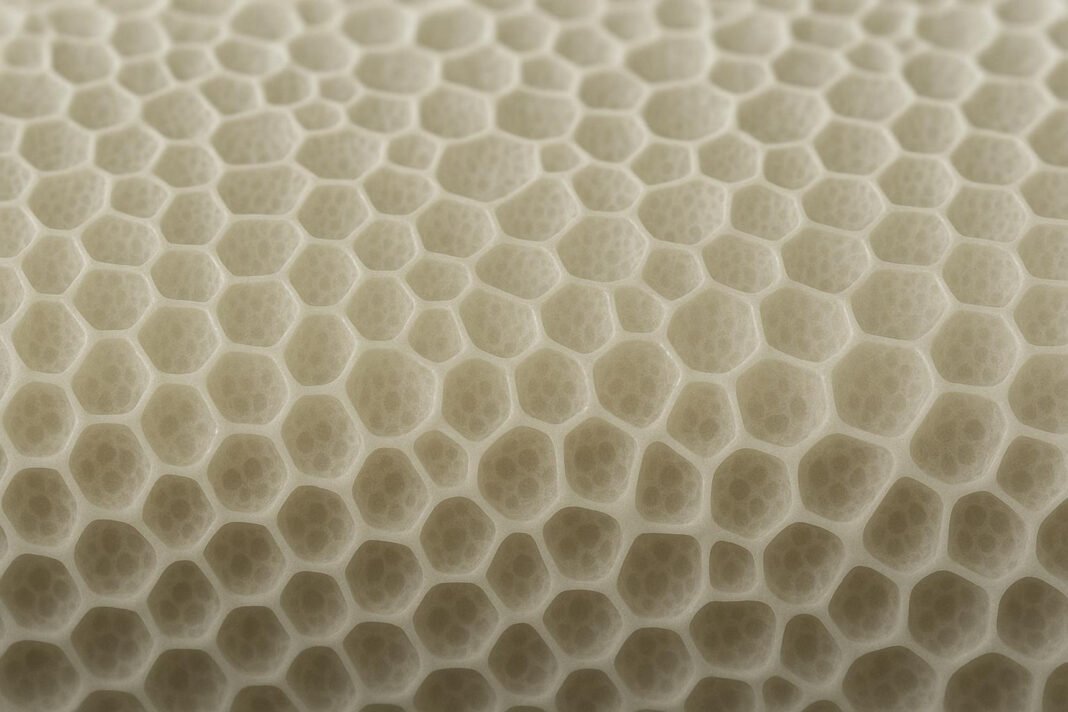
ROHACELL® is a rigid, closed-cell structural foam made from polymethacrylimide (PMI). It acts as a high-performance core in advanced sandwich composite structures. Manufacturers value it for its high strength at low weight, strong dimensional stability, and ability to withstand high temperatures. It can pass through demanding autoclave curing cycles without collapsing. The material is used in aircraft control surfaces, high-speed trains, electric vehicle battery enclosures, and high-frequency radomes. In these applications, engineers can raise structural stiffness while removing unnecessary weight.
The choice of core material can decide whether a composite part simply meets its basic specifications or delivers much better operating efficiency. Buying genuine, accurately made ROHACELL foam gives structural engineers more predictable mechanical performance and helps limit resin absorption during production. A clear understanding of the foam’s chemical structure, heat limits, and processing behavior helps design teams create light structures with the required performance.
What Is ROHACELL® Foam?
ROHACELL® is a high-grade structural foam core made by Evonik for use in fiber-reinforced polymer (FRP) sandwich panels. Unlike open-cell acoustic foams or soft packaging plastics, it is a fully closed-cell, rigid material made to carry bending, shear, and compression loads. When placed between light carbon-fiber or fiberglass face sheets, the foam holds the skins apart. This greatly increases the panel’s area moment of inertia while adding very little weight.
The production method creates a highly even, isotropic cellular structure that behaves consistently in all three directions. Since the cells are sealed, the foam blocks liquid entry. This supports clean machining and predictable bonding over large surfaces. Its combination of chemical resistance and heat stability makes it a key material for industries where structural failure cannot be accepted.
How polymethacrylimide creates a high-performance structural foam
The foam’s performance comes from its polymethacrylimide (PMI) chemical structure. PMI is made by copolymerizing methacrylonitrile and methacrylic acid. A high-temperature foaming reaction then causes imidization. This change creates a dense network of stable heterocyclic imide rings. The result is a stiff, heat-stable molecular chain that resists movement and softening.
This rigid structure gives the small cell walls their high stiffness. Many standard polymers twist, soften, or slowly deform under moderate heat. The imide rings help the material keep its shape under heavy mechanical pressure. This lets thin cell walls carry high compression loads without buckling too early. It also sets PMI apart from more common aliphatic polymer foams.
ROHACELL® versus conventional PVC and PET foam cores
The industrial value of PMI foam becomes clearer when it is compared with common materials such as cross-linked polyvinyl chloride (PVC) and polyethylene terephthalate (PET). PVC cores have long been used in boat hulls and wind turbine blades. Recyclable PET cores are also becoming more common in high-volume transport products. Both materials, however, have fairly low heat limits. They generally begin to soften at about 70 °C to 80 °C and can break down quickly above 120 °C.
Aerospace epoxy prepregs commonly need autoclave curing at 130 °C to 180 °C and pressures of up to 0.7 MPa. PVC and PET cores are not suitable for this type of single-step aerospace consolidation. Standard foams can also have larger cells that absorb a great deal of resin during vacuum infusion. This adds unwanted weight and increases resin use. The even cell structure of ROHACELL® limits excess resin entry, so the finished part stays closer to its planned weight.
Which Properties Make ROHACELL® Foam Industrially Valuable?
Engineers rarely choose a material based on strength alone. They look at how its mechanical, thermal, and production properties work together. ROHACELL® helps reduce the usual trade-off between high-temperature curing and low structural weight. It can simplify production, replace heavy multi-step adhesive bonding with co-curing, and help parts keep close dimensional tolerances throughout long service lives.
The foam also has useful dielectric properties and takes in very little moisture. This can reduce the need for complex ribs, extra core joints, or local honeycomb filling. Parts can have cleaner load paths, fewer production stages, and a lower chance of internal galvanic corrosion.
Low density and high strength-to-weight performance
Reducing weight is one of the most effective ways to lower energy use in transport and mobility systems. With densities starting at about 31 kg/m³ and rising above 200 kg/m³, PMI foam supplies stiffness at a small fraction of the mass of metal or solid polymer alternatives. Its closed-cell form allows nearly all of the polymer material to help resist shear and compression.
In a sandwich panel, bending stiffness is related to the square of the distance between the composite face sheets. A thick, light PMI core can create a large rise in panel stiffness without adding much weight. This high specific modulus allows engineers to make very light aerodynamic skins that resist oil-canning and aerodynamic flutter during severe turbulence.
High compressive, shear, and tensile strength
A sandwich core must keep the outer skins apart while also carrying out-of-plane crushing and shear loads between them. ROHACELL® provides strong mechanical performance across its density range. It stops the face sheets from sliding separately when the panel bends. For example, the high-grade 110 WF formulation has a compressive strength of about 3.1 MPa and a shear strength of 2.2 MPa. This gives heavily loaded laminates a strong internal connection.
Directional honeycomb cores can lose stability when loads act away from their main direction. PMI foam has nearly isotropic behavior, so it handles stress from many directions. This includes local pull-out forces around bolted fasteners and compression from through-thickness clamping. Even stress distribution helps reduce local strain peaks that can start delamination in layered parts.
Heat resistance during composite processing
A long-standing problem in sandwich composite production was finding a light core that could survive autoclave conditions. ROHACELL® helps solve this problem. Standard aerospace grades can handle processing temperatures of up to 130 °C at 0.7 MPa. Heat-treated grades such as WF-HT remain stable up to 180 °C under full consolidation pressure. Special high-temperature grades can also withstand pressureless post-curing temperatures of up to 240 °C.
This heat range lets aerospace technicians co-cure prepreg skins directly onto the foam core in one autoclave cycle. It removes the need for a later bonding stage and the heavy film adhesives used in that stage. The core keeps its resistance to compression creep during the resin’s heat-producing reaction. This helps critical aerodynamic surfaces leave the mold with smooth, clean profiles.
Fatigue resistance and dimensional stability
Parts used in moving structures, such as helicopter rotor blades, wind turbine tips, and high-speed train cowlings, may face millions of repeated stress cycles. PMI foam offers strong fatigue performance. It keeps its cell-wall elasticity and resists major shear damage during many years of vibration and repeated loading.
Stable dimensions under changing temperatures are also valuable. The material has a low coefficient of thermal expansion (CTE) that works well with carbon-fiber reinforced plastics (CFRP). This match reduces thermal mismatch stress, core telegraphing, and warping as a part moves between below-freezing flight conditions and very hot runway surfaces.
What ROHACELL® Foam Grades and Densities Are Available?
No single foam profile can meet every need for price, curing temperature, cell size, and shear strength. Evonik offers ROHACELL® in several grades for different production methods and service conditions. Choosing a grade requires comparing the planned process, such as resin infusion, prepreg autoclave curing, or high-pressure compression molding, with the environment in which the part will operate.
The range includes lower-cost industrial products and highly durable aerospace versions made to meet strict flammability, smoke, and toxicity (FST) requirements. A suitable choice, made on your own or with the help of a supplier such as Chem-Craft, prevents engineers from adding unnecessary core weight or paying for heat resistance that the part does not need.
Selecting densities from approximately 31 to 200 kg/m³
The main name of a PMI core usually begins with its nominal density. Density has a direct effect on mechanical strength, shear modulus, and impact resistance. The table below shows representative properties for widely used WF and WF-HT aerospace grade families:
- Grade
- Density (kg/m³)
- Compressive Strength (MPa)
- Shear Strength (MPa)
- Shear Modulus (MPa)
- 51 WF
- 52
- 0.6
- 0.8
- 20
- 71 WF
- 75
- 1.3
- 1.3
- 34
- 110 WF
- 110
- 3.1
- 2.2
- 60
- 200 WF
- 205
- 9.0
- 5.0
- 120
Low-density grades, including 31 and 51 kg/m³ versions, are often used in large enclosures that carry little or no structural load. Examples include cabin sidewalls and electronic fairings, where low mass is the main goal. Higher-density grades, such as 110 and 200 kg/m³, offer the shear and compression strength needed near landing gear doors, engine nacelle pylons, and heavily loaded structural ribs.
Grade differences for aerospace, mobility, and specialty parts
Density is only one difference between the available grades. Other formulations change the foam’s cell structure and ability to stretch for particular industrial conditions. ROHACELL® WF is widely used for structural aerospace parts. It has formal qualifications for stringer-stiffened skins, pressure bulkheads, and wing trailing edges because of its controlled quality and FST performance.
ROHACELL® IG-F is aimed at industrial and automotive uses. It combines structural stiffness, simple CNC machining, and a lower price. For parts that must allow electromagnetic signals to pass through with little interference, ROHACELL® HF has a very low dielectric constant and low loss factor. It is well suited to military and commercial radar domes, known as radomes, as well as medical imaging tables where radio-frequency distortion must be kept very low.
ROHACELL® grades for epoxy, thermoplastic, and prepreg processing
Each grade also has a suitable processing range. Standard grades work with common 120 °C curing epoxies, vinyl esters, and polyurethanes. Parts made with high-temperature autoclave prepreg systems need ROHACELL® WF-HT or XT. These products receive special factory heat treatment to remove moisture and reduce outgassing at temperatures up to 180 °C and pressures of 0.7 MPa.
Cell size also affects resin absorption. ROHACELL® RIMA has a very fine cell structure that is made to keep liquid resin entry below 50 g/m² during vacuum infusion. For high-volume mobility products, the newer acrylic-based ROHACRYL® range offers a thermoformable, lower-cost option between standard PVC and higher-performance PMI.
How Does ROHACELL® Improve Composite Design?
Using PMI foam in a composite part can simplify the structure and remove several production steps. Traditional composite panels may need bonded stringers, internal hat stiffeners, or hollow ribs to reach the required stiffness. These assemblies can take many technician hours for hand lay-up, vacuum bagging, adhesive application, and non-destructive testing.
A sandwich panel with a structural foam core combines many of these separate parts into one continuous shape. By supporting stiffness across a wide area, the core makes one-stage molding possible. It can remove fasteners, adhesive joints, and internal supports while producing a cleaner and more aerodynamic surface.
Reducing structural weight without sacrificing stiffness
Panel bending stiffness rises rapidly as the panel becomes thicker, while weight rises more slowly when the added thickness comes from a light core. Replacing a solid, multi-ply CFRP laminate with thin composite face sheets over a ROHACELL® core can provide equal or better bending stiffness. It can also cut component mass by about 40% to 60%.
This weight reduction does not require a loss of torsional or bending strength. The core supports the composite skins over their full area. It helps prevent micro-buckling and skin wrinkling under high in-plane compression. The finished panel makes better use of every carbon-fiber ply and carries loads with greater efficiency.
Increasing payload, range, and energy efficiency
Each kilogram removed from a commercial aircraft, drone, or high-speed vehicle can increase payload, extend range, or reduce fuel and battery use. In aircraft, lower mass can also reduce lifetime emissions and operating costs. For commercial planes and high-altitude long-endurance (HALE) UAVs, lower structural weight can make room for extra sensors or longer time in the air.
In electric vehicles, total mass affects the battery size needed for a given range. Light PMI cores in floor pans, roof modules, and battery enclosures help offset the weight of battery packs. University teams developing high-speed Hyperloop pods also use ROHACELL® for this reason. A strong strength-to-weight ratio is needed to meet very high acceleration and speed targets while power remains limited.
How Is ROHACELL® Foam Processed into Composite Parts?
A high-performance core is useful only if it can be produced in practical ways. ROHACELL® works with common composite production methods. It can be machined from sheet stock or shaped in high-volume production lines. Its closed-cell structure gives stable, predictable machining results. Fabricators can make detailed, multi-axis 3D forms with little tearing at the edges.
Good processing still requires a clear understanding of how the foam reacts to heat and pressure. Cell-wall stiffness decreases as temperature rises. Production engineers must coordinate cure temperature, heating speed, and consolidation pressure to avoid early core compression or marks showing through the face sheets.
CNC machining, cutting, and shaping the foam core
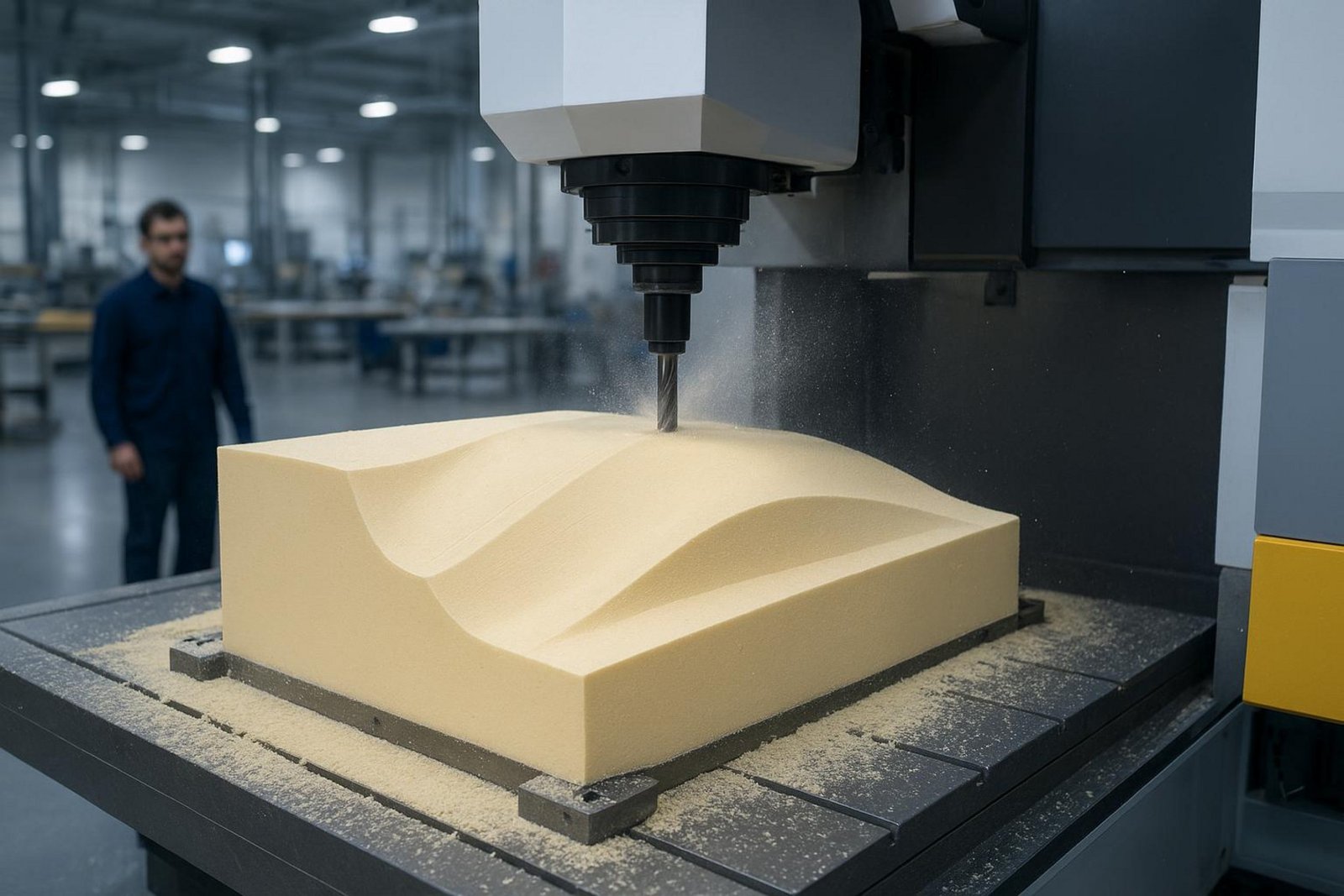
ROHACELL® can be cut on standard woodworking or plastic CNC milling machines. High spindle speeds and carbide or diamond-coated routing tools are suitable for the material. Since the foam has no fiber grain, it can produce sharp chamfers, smooth tapers, and accurate pockets for local metal inserts without splintering or delamination.
The foam can also be thermoformed. Sheets are heated evenly above their glass transition temperature, usually between 170 °C and 215 °C, depending on the grade. The softened polymer can then be bent over a mold with one or two curved surfaces. After cooling under vacuum or light press tooling, the core keeps its new shape. This limits spring-back and reduces internal stress.
Autoclave, compression molding, and out-of-autoclave processing
ROHACELL® can be used with many current composite curing methods:
Autoclave Prepreg Curing: Heat-treated WF-HT grades can withstand pressures of up to 0.7 MPa at 180 °C. This allows aerospace prepreg skins to be cured with the core during one autoclave cycle.
Resin Transfer Molding (RTM) and VARTM: Liquid resin is injected into a closed mold containing dry carbon or glass fabric around the shaped core. The closed cells limit excess resin flow and help keep the part within its planned weight.
High-Pressure Compression Molding: In fast automotive production, press tools join the resin and skins to the core in cycles of less than three minutes.
In-Mold Foaming (Triple F): For high-volume 3D parts, Evonik’s Triple F process foams PMI beads directly inside closed tooling around metal fasteners. It produces near-final-shape parts with no machining waste.
Out-of-autoclave (OOA) vacuum-bag-only curing is also being used more often. When low-temperature prepregs are combined with pre-shaped PMI cores, manufacturers can make structural parts close in quality to autoclave components. They can do this with much lower tooling investment and shorter production costs.
Preventing core crushing, resin pooling, and surface defects
High-temperature softening needs careful control during composite production. A data sheet may show that a grade is stable up to 180 °C, yet tests show that PMI foam loses part of its yield stress during heating. The reduction is about 22% at 80 °C and 35% at 120 °C compared with room temperature. If full autoclave pressure is applied while the resin is fluid and the core is hot, local core crushing may result.
Process engineers can reduce this risk with a stepped pressure schedule. They keep consolidation pressure low until the resin reaches its lowest viscosity and begins to gel. Full pressure is applied only after the core has become more stable. Very fine cell grades such as RIMA also reduce resin pooling along the foam-skin boundary. This helps prevent visible print-through on high-quality aerodynamic and automotive surfaces.
What Are the Main Industrial Uses of ROHACELL® Foam?
ROHACELL® combines strength, heat resistance, and similar behavior in all directions. This makes it useful in many demanding applications. Any part that needs low weight, safe structural margins, and accurate dimensions at high temperatures may benefit from a PMI foam core.
The material was first used mainly in advanced military aircraft. It has since spread into commercial aircraft, automotive production, marine transport, medical equipment, and renewable energy systems. Its wide use reflects two main benefits: it improves structural performance and can shorten production cycles.
Aerospace interiors, aircraft structures, and control surfaces
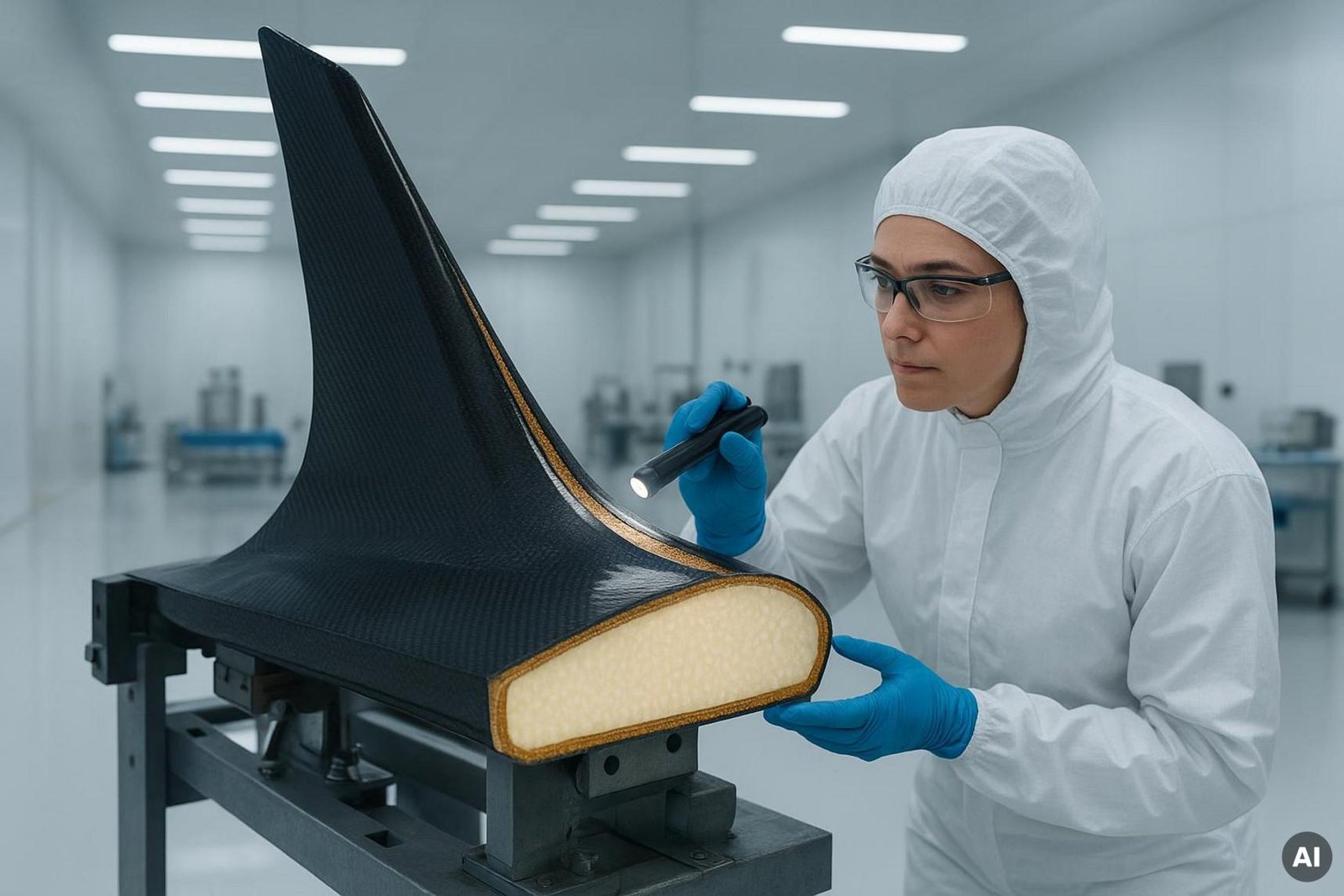
Aerospace is the largest end-use sector for structural PMI cores. ROHACELL® WF and WF-HT are used in winglets, trailing-edge flaps, belly fairings, stringer-stiffened fuselage panels, and nose landing-gear doors. Airbus testing of landing gear doors made with ROHACELL HERO reported weight reductions of up to 19% and cost savings of up to 25%. These gains came from using a single-step co-curing method.
Inside aircraft, the material meets strict FAR 25.853 flame, smoke, and toxicity (FST) requirements. This makes it suitable for cabin partitions, galley monuments, and floor panels. Space launch vehicles also use PMI cores in payload fairings and interstage adapters. These parts must handle launch noise, vibration, and high aerodynamic heating without releasing gas.
Automotive body panels, roof systems, and battery components
Performance cars and electric vehicles use PMI foam sandwich parts to lower the center of gravity and offset the weight of heavy powertrain components. In structural body-in-white (BIW) parts, the foam is used in carbon-fiber roof panels, hood assemblies, rear diffusers, and side-sill inserts. One example is a light CFRP engine hood made with ROHACELL 71 IG-F. It cut the mass by 60%, bringing the hood down to only 5 kg, while matching the torsional stiffness of the original steel part.
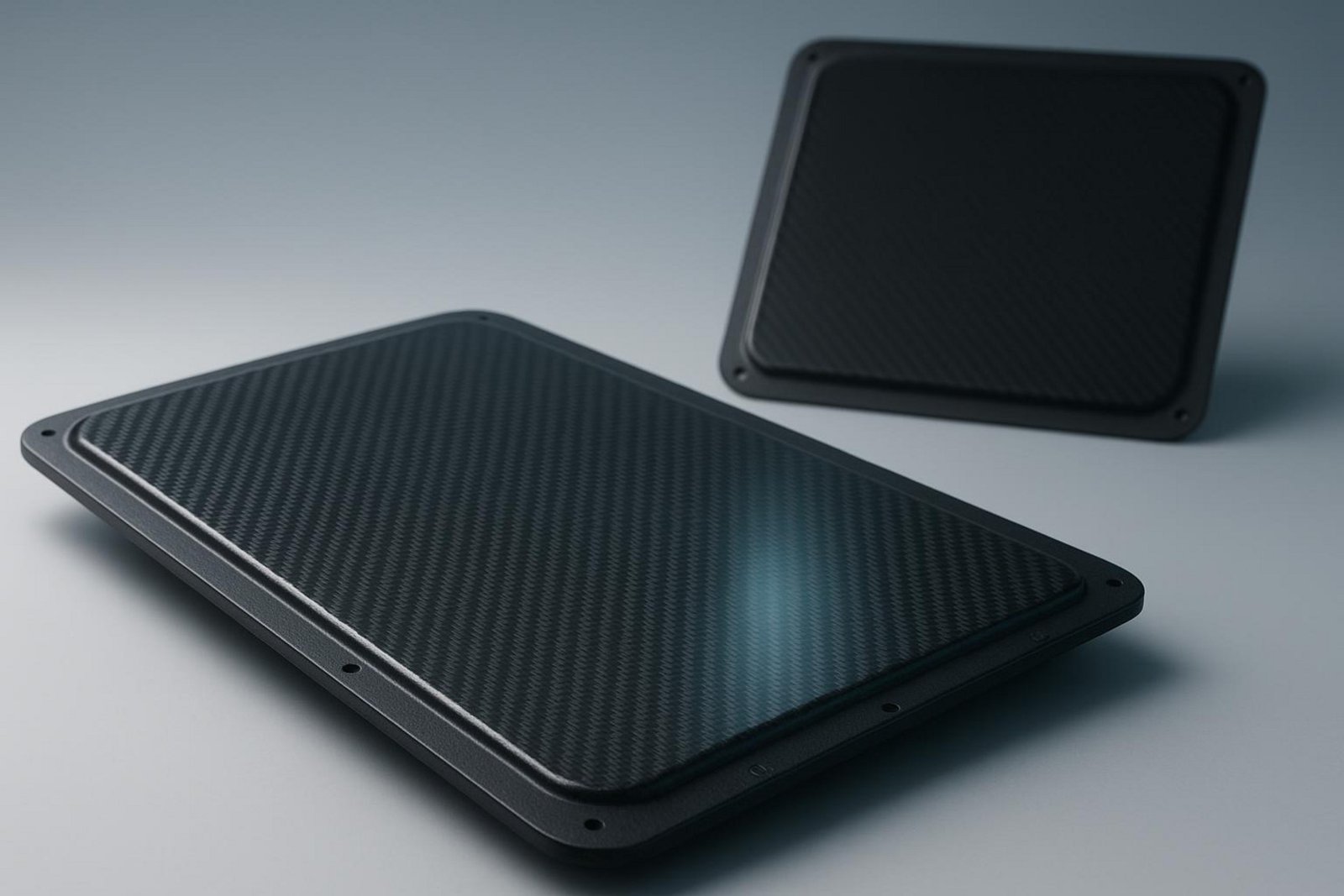
As electric vehicles become more common, PMI foam is also being used in battery enclosures. Placed between composite skins in battery covers and crash shields, it adds stiffness, absorbs energy during impacts, and helps block heat. These functions protect lithium-ion cells from punctures and sudden changes in surrounding temperature.
High-speed rail, marine, and transportation structures
Rail manufacturers focus on passenger safety, fire behavior, and long fatigue life under repeated vibration. Front cab cowlings on modern high-speed trains often use PMI sandwich structures. These parts help absorb shock waves when trains enter tunnels at speeds above 300 km/h. The foam also reduces cabin vibration, giving passengers a quieter ride without the weight of lead-based acoustic blankets.
In high-speed boats and racing hulls, the closed-cell foam helps protect against water absorption. Honeycomb cores can fill with seawater if a damaged outer skin allows water inside. PMI foam blocks water movement through the laminate. This helps preserve buoyancy and hull strength during repeated impacts from waves.
Wind-energy blades and lightweight industrial equipment
Wind turbine blades now exceed 100 meters in length, creating very high gravitational and aerodynamic loads. In shear webs and blade trailing edges, ROHACELL WIND-F can replace standard PVC and reduce factory cycle times by about 35% to 55%. A business case for a 50-meter IEC III wind blade found that changing to PMI removed a large amount of mold time. Labor costs fell by €2,080 per blade, tooling depreciation fell by €866, and total blade production cost dropped by 4%.
In precision industrial equipment, the foam can form the structural core of high-speed pick-and-place robot arms. Its low rotational inertia allows quick acceleration with less motor wear. In medical equipment, PMI’s ability to let X-rays and other radiation pass through makes it a common core for patient tables in CT scanners and mammography systems. It supports clear scans while allowing the use of low radiation doses.
What Are the Limitations and Risks of ROHACELL® Foam?
ROHACELL® is not a universal replacement for every core material. Sound engineering requires a review of price, mechanical limits, and long-term durability before the material is chosen. Treating it as a direct replacement for cheaper honeycomb or PVC without studying possible failure modes can create design problems.
A proper review of a high-performance structural foam must cover both raw material cost and the ways a sandwich panel can fail in difficult conditions. Knowing these limits helps engineers add suitable protective features before finalizing the mold design and spending money on tooling.
Why ROHACELL® can cost more than PVC or PET cores
Material price is the main barrier to wider use. Making polymethacrylimide requires specialized chemical ingredients, controlled polymer production, and carefully managed heating cycles. PMI costs much more per cubic meter than standard PVC, balsa wood, or recyclable PET foam. For low-margin, high-volume goods such as small recreational boats or simple building panels, the higher purchase price may not be recovered through weight savings.
The financial case for ROHACELL® is based on the full production and service cost, rather than the starting price of the core. If the material allows one-step co-curing, removes secondary adhesive film operations, reduces cycle time by 40%, or lowers the time that expensive autoclaves are occupied, the cost of each finished and approved part can be lower than a part made from a cheaper core that needs several assembly stages.
Managing impact damage, edge exposure, and local loads
Local loads and impact resistance also need attention. Thin sandwich panels exposed to sharp impacts, such as dropped tools or runway debris, may suffer brittle cell crushing when a low-density PMI grade is used. Standard WF grades have an elongation at break of about 3%. This makes them more prone to local dents than high-toughness HE grades, which provide about 8% to 10.8% elongation at break.
Although isotropic PMI is easier to machine into 3D shapes than directional honeycomb, NASA tests show that aluminum honeycomb keeps higher compressive and shear moduli at the same overall density. Thick panels with heavy bolted inserts may need local foam densification, solid edge close-outs, or metal bushings. These features help stop core shear buckling under high clamping forces.
How Should Engineers Select ROHACELL® Foam for an Application?
Choosing a ROHACELL® grade requires a planned engineering process that compares structural needs with production limits. Selecting a high-density grade too quickly can add unnecessary weight. Choosing a low-density core without checking production pressure can lead to collapse during autoclave curing.
A sound selection process reviews static loads, impact conditions, resin flow, and the highest cure temperature. A step-by-step approach lets engineering teams use PMI’s advantages without specifying more performance than the part needs.
Defining load cases, stiffness targets, and weight limits
The process starts by calculating the main loads in the sandwich panel. These include bending moments, in-plane shear, torsion, and possible impact energy. Engineers then set a minimum bending stiffness and a maximum part weight. These values guide the required core thickness and density:
Pure Flexural Stiffness: This depends mainly on core thickness. A thicker, low-density core such as 51 WF can greatly increase the moment of inertia while adding little mass.
High Shear Loads: These need higher-density grades such as 110 or 200 WF. Such cores can carry high transverse shear without diagonal cracking.
Elevated Dynamic Impact: These loads call for grades with greater elongation, such as ROHACELL® HE, to absorb local impact energy without separating the surface skin.
Radio-Frequency Applications: These applications call for ROHACELL® HF, which has a low dielectric constant and low signal loss across microwave frequency bands.
Comparing these load cases with the material property data gives the design team a starting set of physical requirements before production details are refined.
Matching density and thickness to structural requirements
After the structural needs are set, designers must check whether the chosen core can survive the curing process. If the part will use a 180 °C prepreg cure at 0.7 MPa in an autoclave, low-density grades without heat treatment are usually rejected because of compression creep risk. The team then looks at WF-HT or XT versions.
Service conditions also need to be included in the analysis. Long-term qualification must separate dry, room-temperature test values from performance in hot and wet conditions. Moisture and heat together can soften polymer cell walls. Safety margins should be checked with reduction factors based on conditioned test coupons. Combining finite element modeling (FEM) with physical coupon tests helps show whether the final ROHACELL® sandwich part will work reliably throughout its service life.
Future PMI foam development is centered on recycling and digital production. As environmental rules call for more responsible composite life cycles, researchers are working on chemical recycling methods that can recover cyclic imide polymers from old sandwich panels. At the same time, advanced finite element software can model how individual PMI cells deform during thermoforming and autoclave compaction. When virtual process models are linked with digital factory data, engineers can predict resin absorption, local shear stress, and temperature differences before molds are made. This can help aerospace and mobility manufacturers produce next-generation composite parts correctly on the first production run.