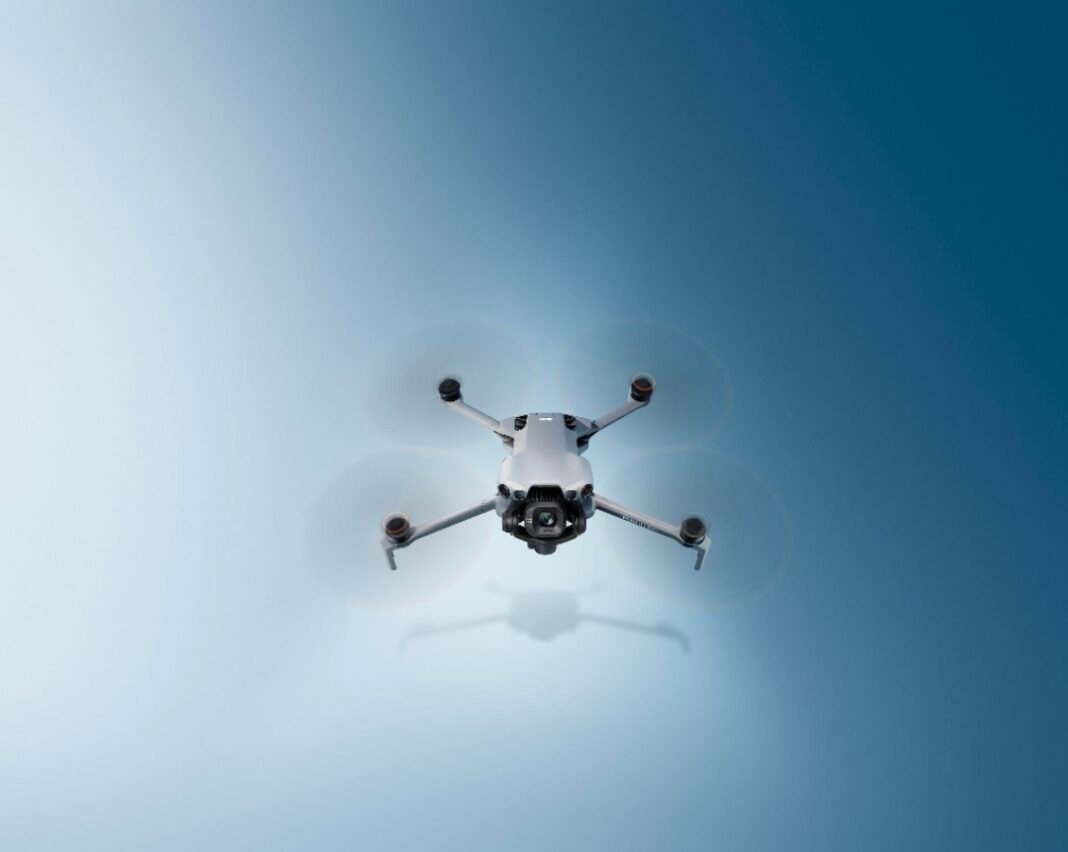
When shopping for a camera drone, it is easy to assume that more image quality is always better. A larger sensor sounds better than a smaller one, 100MP sounds better than 50MP, and 6K sounds better than 4K.
Technically, higher specifications can provide more information. The more useful question is whether you will actually see — or use — that extra information.
Someone filming weekend trips for social media has very different requirements from a photographer making large prints or a filmmaker who expects to crop, colour-grade and deliver commercial footage. Choosing well starts with understanding the final use of the image, not simply buying the highest specification available.
For social media, you probably need less than you think
Instagram, TikTok, YouTube Shorts and other mobile-first platforms compress uploaded video significantly. Viewers are also often watching on relatively small screens.
That means a well-exposed, stable 4K image can be far more useful than a much higher-resolution file that is poorly composed or difficult to edit.
For casual aerial videos, travel memories and social content, priorities such as good stabilisation, reliable exposure and a practical workflow usually matter more than having the maximum available megapixel count.
This is why choosing a drone with camera should begin with the question: where will the finished footage actually be seen?
If the answer is mainly phones, tablets and online video, a strong 4K camera already provides considerable room to work.
When does a larger sensor become important?
Sensor size affects something different from resolution.
A larger sensor generally has more physical area available to collect light. This becomes useful when photographing sunrise, sunset, forests, snow, bright water or scenes where very light and very dark areas appear together.
Canadian landscapes can create exactly these conditions. Snow under bright sunlight can produce intense highlights while trees or mountains remain in deep shadow. Around sunrise or dusk, available light can fall rapidly.
A larger sensor can provide more flexibility in these situations, especially when shooting RAW photos or footage that will later be colour-graded.
However, this does not mean everyone needs the largest sensor available. If most flights take place in good daylight and the finished image is destined for social platforms, a smaller but capable sensor may already produce excellent results.
Do you really need 50MP or 100MP?
Megapixels mainly become valuable when you need to crop.
Suppose you capture a wide landscape but later decide that a cabin, mountain peak or section of shoreline should fill more of the frame. A high-resolution photograph gives you more room to crop while retaining enough pixels for the final image.
The same advantage matters for large prints and certain commercial applications.
But 100MP does not automatically mean twice the visible image quality of 50MP. Lens quality, lighting, sensor size, processing and the way the photograph is viewed all affect the result.
If you rarely crop heavily and mostly share images online, very high still-photo resolution may spend much of its time unused.
Is 4K enough for drone video?
For most creators, yes.
4K already offers enough resolution for high-quality YouTube videos, televisions and most online professional work. It also provides some flexibility if the final project is delivered in 1080p.
Higher resolutions such as 6K become useful when you want to reframe a shot substantially, stabilise it further in post-production or create multiple crops from one recording.
The trade-off is larger files and a more demanding editing workflow.
Before paying specifically for higher video resolution, ask whether your computer, storage and editing process will actually take advantage of it.
DJI Mini 5 Pro: more image quality than many travellers need
For users who want strong image quality without moving to a large aircraft, DJI Mini 5 Pro offers a particularly useful balance.
It uses a 1-inch CMOS sensor with 50MP effective resolution, an f/1.8 lens and supports 4K recording up to 60fps, plus 4K/120fps slow motion. It also records JPEG and DNG RAW photographs and offers 10-bit HLG and D-Log M recording for creators who want more flexibility in post-production.
The important specification here is not just 50MP.
A 1-inch sensor gives a compact drone a stronger foundation for difficult light, while RAW and 10-bit recording provide enough flexibility for photographers and video creators who want to edit their images seriously.
For travel, hiking, social content and general landscape photography, this level of image quality is already likely to satisfy most users. Moving to a much larger drone only makes sense if there is a specific capability you are missing.
Air 3S: choose it for perspective, not just image quality
DJI Air 3S becomes more interesting when one camera angle is no longer enough.
Its main camera combines a 1-inch 50MP sensor with a 24mm-equivalent lens. The second camera uses a 1/1.3-inch 48MP sensor with a 70mm-equivalent medium tele lens. DJI states that the main camera can deliver up to 14 stops of dynamic range under its specified test conditions, while both cameras support 4K/60fps HDR video and 10-bit D-Log M.
The real reason to move from a Mini 5 Pro to Air 3S is therefore not simply “better quality”.
The 70mm camera changes how a landscape can be composed. It can compress distant mountains, isolate a building or create stronger layers between foreground and background.
For photographers who already understand why they want a longer focal length, this can improve the final image more than simply adding extra megapixels.
When does Mavic 4 Pro become worth it?
At the flagship level, DJI Mavic 4 Pro is designed for creators who can make use of substantially more imaging flexibility.
Its main Hasselblad camera uses a 4/3 CMOS sensor with 100MP effective resolution and a 28mm-equivalent lens with an adjustable f/2.0–f/11 aperture. It is joined by a 70mm-equivalent 48MP medium tele camera and a 168mm-equivalent 50MP tele camera. The main camera can record up to 6K/60fps, while all three cameras support high-resolution 4K recording.
For a commercial filmmaker or landscape photographer, these differences can matter.
The larger main sensor gives more imaging potential, the adjustable aperture adds exposure control, and three real focal lengths allow very different compositions without relying primarily on digital cropping.
But these features only justify the additional size and cost when they solve a real creative requirement.
A traveller producing mostly 4K online content may achieve everything needed with Mini 5 Pro. Buying Mavic 4 Pro purely because 100MP is a larger number would mean paying for capabilities that may never appear in the finished work.
Dynamic range can matter more than resolution
When evaluating image quality, dynamic range is easy to overlook.
A drone may be filming a bright sky while the ground below remains several stops darker. If the camera cannot preserve information across both areas, highlights may turn white or shadows may lose detail.
This is why a well-exposed image from a capable sensor can look better than a nominally higher-resolution image from a less suitable camera.
Dynamic range becomes especially important for landscapes, sunsets and footage intended for colour grading.
For these uses, sensor quality and recording format should often come before an obsession with maximum pixel count.
Match the drone to the final image
A simple way to decide is to work backwards.
If you mainly want social media, family trips and casual travel video, strong 4K recording is already enough.
If you want RAW landscape photography, more serious colour grading and frequent shooting in difficult light, a 1-inch sensor such as the one in Mini 5 Pro becomes highly worthwhile.
If you want to create compositions with both wide and medium-tele perspectives during the same flight, Air 3S adds a meaningful creative advantage.
And if your work genuinely benefits from a 4/3 sensor, 100MP photographs, 6K video and three different focal lengths, Mavic 4 Pro provides the most complete imaging system of the three.
The goal is not to buy the maximum image quality available. It is to buy enough quality that the camera stops being the limitation — without paying for resolution, sensor capacity or lenses that your final images will never actually use.
READ MORE: Tech Mag Today