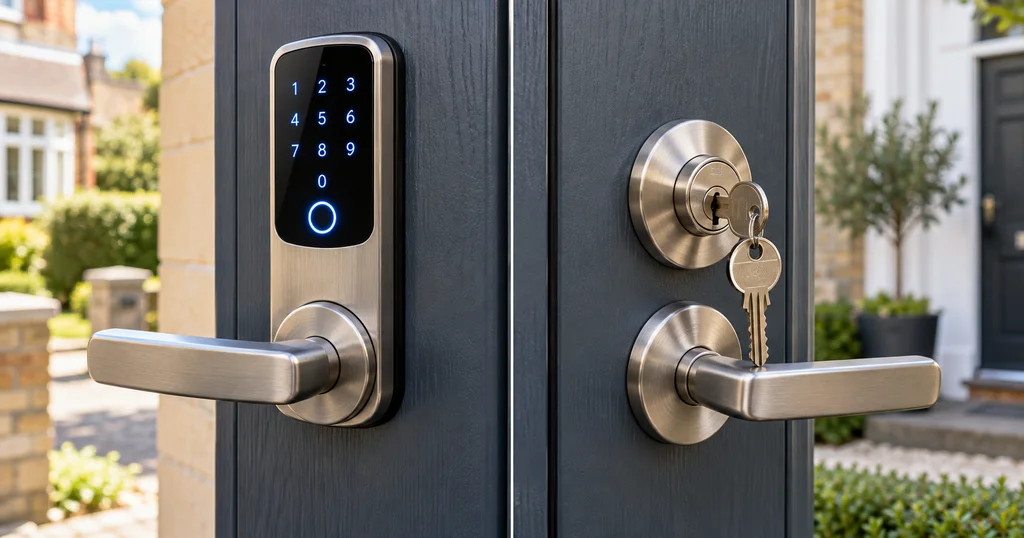
A front-door lock is easy to overlook until a key goes missing, the mechanism becomes difficult to use or a nearby break-in prompts you to review your home security. For Coventry homeowners considering an upgrade, a common question is whether to choose a smart lock or a traditional mechanical lock.
Both types can provide effective security when they suit the door and are installed correctly. The right option depends on your existing door, who needs access, the features you value and any requirements in your home insurance policy.
For expert advice on choosing between a smart lock and a traditional lock, contact a trusted locksmith service in Coventry.
This guide compares smart and traditional locks, explains which security details to check and covers what to assess before choosing a replacement.
Start by Assessing the Existing Door
A lock works as part of a larger system. Its performance depends on the cylinder, locking mechanism, door, frame, hinges and keeps working together properly.
Older locks may still operate while offering less protection than a modern, security-rated replacement. Euro-cylinder locks deserve particular attention because some older cylinders may be vulnerable to lock snapping, a method in which the cylinder is deliberately broken to reach the locking mechanism.
Replacing an outdated cylinder with a suitable, properly rated model may improve security without replacing the whole door. If a break-in has damaged the door, however, the immediate priority is to secure the property. A locksmith can assess the damage, restore the door’s security and advise on longer-term improvements.
Once the immediate issue is resolved, you can consider whether a stronger mechanical lock, a smart system or a combination of both is right for your home.
How Traditional Locks Work in Modern Homes
Traditional mechanical locks remain a practical choice for many households. They are familiar to use and do not rely on batteries, apps, Wi-Fi or software.
A well-made mechanical lock that is suitable for the door and installed correctly can provide dependable everyday security. Homeowners may also want to check whether the lock meets a recognised standard, such as BS 3621, where that standard is appropriate for the door and policy requirements.
Advantages of Traditional Locks
Simple operation: Use a key to operate the lock, with little setup or learning required.
No electronic dependency: The lock is not affected by an internet outage, a flat phone battery or an app problem.
Recognised testing: Established standards can help homeowners compare suitable mechanical locks.
Straightforward servicing: Locksmiths commonly work with mechanical cylinders, mortice locks and multipoint locking systems.
Where Traditional Locks Can Be Less Convenient
Key management is a common drawback. If a key is lost or stolen, you may need to replace or re-key the lock. Spare keys can also be difficult to track when they have been given to relatives, tenants or tradespeople.
A traditional lock does not record who has entered. Anyone with a working key may be able to unlock the door, and the lock itself cannot show when it was used. For households that prioritise simplicity, this may be a fair trade-off. Others may prefer the access controls available with some smart locks.
What Changes When You Install a Smart Lock?
A smart lock uses electronic access to replace or supplement a conventional key. Depending on the model, it may allow entry through an app, PIN, key fob, fingerprint or another authorised method.
The main difference is the ability to manage access. Some systems let homeowners create temporary access for a visitor and remove it later. Compatible locks may also keep an activity record or connect with other home-security devices.
Why Some Homeowners Choose Smart Locks
Smart access can help when several people need to enter a property. It may reduce the need to hand out spare keys and can make it easier to change who is authorised to unlock the door.
Temporary access can be useful for a cleaner, relative or tradesperson. Some systems also provide entry records, giving homeowners more visibility into when authorised access takes place.
These features are most useful when they solve a real need. Remote unlocking or fingerprint entry may sound appealing, but convenience should be weighed against the door’s physical security and the reliability of the system.
Smart Features Do Not Guarantee Stronger Security
A lock does not become secure just because it connects to an app. The product’s physical construction, its installation and the condition of the door all matter.
Before choosing a smart lock, check whether it is suitable for your door and existing locking mechanism. Ask what happens if the battery runs low, the app is unavailable or the electronic component fails. Some products provide a mechanical override, while others may have different backup arrangements.
A professional assessment can help establish whether the door, cylinder and multipoint mechanism are compatible with the proposed lock. It can also identify whether an upgrade to the door or frame is needed before fitting new technology.
Smart vs Traditional Locks: Which Is Better?
There is no single best option for every property. Start by deciding what matters most to your household.
A Traditional Lock May Suit You If:
- You prefer a key-operated system.
- You do not need remote or temporary access.
- You want to avoid dependence on batteries or electronic systems.
- Your existing door already has a suitable, secure locking system.
- You value familiar operation and straightforward maintenance.
A Smart Lock May Suit You If:
- Several people regularly need access.
- You want to manage access without circulating physical keys.
- Temporary access would be useful.
- You value access records.
- You already use compatible home-security devices.
Some homes may benefit from a hybrid setup that combines mechanical security with smart access. The important point is to confirm that the complete arrangement suits the door and meets any relevant insurance conditions.
Check Your Home Insurance Before Replacing a Lock
Insurance requirements are easy to miss when planning a lock upgrade. Some UK home insurance policies specify a lock type or security standard for final exit doors. A policy might refer to a five-lever mortice deadlock that meets BS 3621.
A smart lock does not automatically satisfy a policy requirement. Before buying or removing a lock:
- Read the security section of your home insurance policy.
- Note any named lock type or standard.
- Compare the policy wording with the proposed replacement.
- Ask your insurer or a locksmith if the requirements are unclear.
Where a policy requires a particular mechanical lock, it may be possible to retain it while adding smart functionality. Confirm the details before making changes.
Consider More Than the Front Door
Upgrading the front door may improve one part of your home’s security, but it does not tell you whether other entry points need attention. Consider rear and patio doors, side entrances, garage access, accessible windows and gates.
A strong front-door lock may not solve the wider problem if another entrance has an old cylinder, a faulty mechanism or a poorly aligned door. An assessment of the whole property can help you decide which improvement should come first.
Check the Door and Frame, Too
A door that is difficult to lock may have an alignment problem rather than a faulty lock. You might notice that the handle feels stiff, the key is harder to turn, the door needs lifting or the mechanism catches.
Avoid forcing the handle. Repeated pressure can strain the internal parts of a multipoint locking system and may turn a minor adjustment issue into a more serious repair.
Timber and uPVC doors can move over time. Changes in temperature, moisture or the surrounding frame may affect how the door and lock line up. If operation becomes difficult, ask a locksmith to inspect the door instead of repeatedly forcing it.
How Moisture Can Affect Door Security
Moisture can contribute to movement in building materials, including areas around a door frame. If damp is affecting a door or nearby structure, it is important to identify where the water is coming from as well as address the visible symptoms.
Water may enter through roof areas such as failed flashing, blocked drainage or displaced roofing materials. Property owners investigating a roof issue can find information from roofers Edinburgh about roofing work in Edinburgh.
If moisture is contributing to movement around a door frame, replacing the lock alone may not prevent the alignment issue from returning. Consider the wider condition of the property when deciding what work is needed.
Security Standards Worth Asking About
Recognised standards can give you a clearer basis for comparing products than marketing claims alone. Depending on the lock and door, standards or ratings to discuss may include BS 3621, TS 007 for euro cylinders, Sold Secure Diamond ratings or applicable testing for smart-lock products.
For a euro cylinder, ask whether it offers suitable protection against common attack methods, including snapping. The right product depends on the existing door and locking system, so a high rating is only useful when the product is compatible and correctly fitted.
Five Steps to Take Before Upgrading Your Locks
1. Have the Door Assessed
Find out whether the lock is the weakest part. The cylinder, multipoint mechanism, frame or another entrance may need attention first.
2. Check Your Insurance
Review any lock requirements before ordering a smart lock or removing a mechanical one.
3. Decide How You Need to Manage Access
Consider how many people need entry and whether temporary or remote access would be useful in practice.
4. Check Security Ratings
Compare recognised standards and physical security features. Do not choose a product based on convenience features alone.
5. Arrange Suitable Installation
A good lock can perform poorly if it is fitted incorrectly or used with an unsuitable door. Proper installation also gives you an opportunity to check the door’s alignment and mechanism.
When Should You Replace an Existing Lock?
You do not have to wait until a lock stops working completely. Consider arranging an inspection if keys have been lost, you do not know who has copies, the cylinder is old, the lock has become stiff or the door has been forced during an attempted break-in.
It may also be sensible to review the locks after moving into a property or when introducing managed smart access. Depending on the cause, replacing a cylinder or correcting the door alignment may be enough. A full lock replacement is not always necessary.
Getting Locksmith Advice in Coventry
Lock advice should start with the property and the way the door is used. Kingdom Locksmith helps Coventry homeowners assess existing door security and consider suitable options, from improving a traditional lock to exploring smart access.
An inspection can help determine whether the cylinder needs upgrading, whether the door is aligned, whether the multipoint mechanism is operating properly and whether a proposed smart lock suits the installation. It can also help identify another entrance that deserves attention first.
Choosing a lock after checking the whole setup can help you avoid paying for features that do not solve the actual problem.
What If You Need Help While Travelling?
Home security is one concern, but drivers can also face unexpected problems while away from home. If a vehicle breaks down in or around Oldham, vehicle recovery service Oldham is a relevant option to look into for recovery assistance.
As with choosing a lock, it helps to check the service details and understand what support is available before you need it. Keeping useful contact information accessible can make an unexpected situation easier to manage.
Final Thoughts
Smart and traditional locks can both play a role in home security. Traditional locks offer familiar operation and do not rely on electronic systems, while smart locks may provide more flexible access management and useful features for some households.
The choice should depend on your door, your household’s access needs and any relevant insurance conditions. Check the door and frame, review your policy and get advice on product compatibility before deciding.
A considered upgrade starts with the property’s needs, rather than simply choosing the newest lock available.