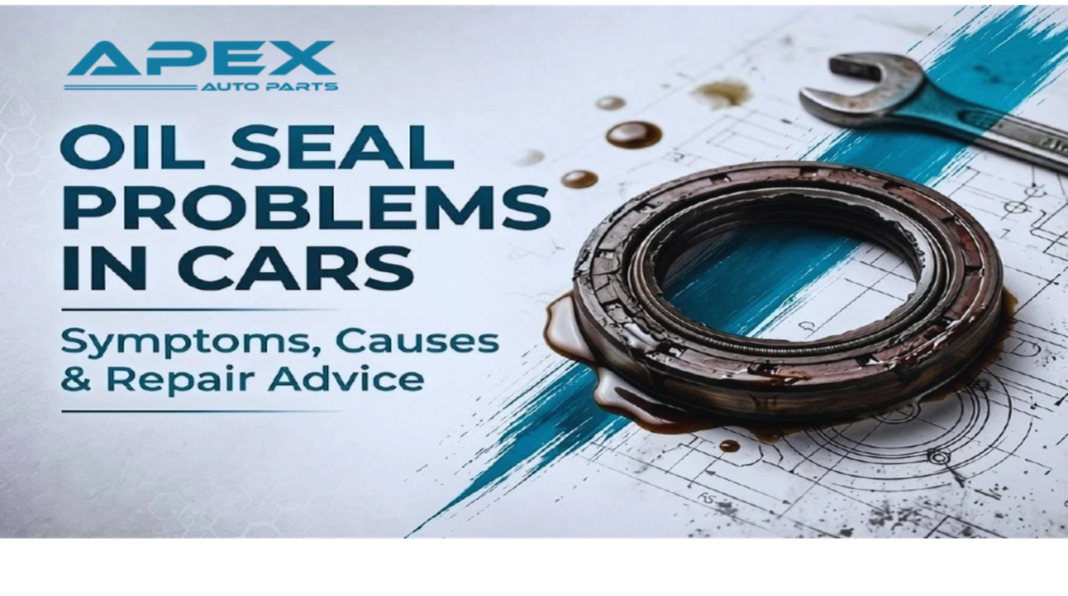
An oil seal is a small component that keeps lubricant inside an engine, gearbox, or differential while allowing a shaft to rotate. Depending on its design, it can also prevent dirt, moisture and other contaminants from reaching the moving surface.
Although an oil seal may look like a simple rubber ring, its condition can affect expensive parts around it. A minor leak can eventually reduce the oil level, weaken lubrication and increase the risk of engine or gearbox damage.
However, replacing the visible seal is not always enough. A reliable repair depends on finding the leak’s exact source, identifying why it developed, and fitting the correct replacement.
What Does an Oil Seal Do?
A typical shaft oil seal sits between a rotating shaft and a fixed housing. Its outer edge remains secured inside the housing, while its flexible inner lip runs against the shaft.
Many oil seals contain metal reinforcement and a small circular spring. The metal section helps the seal maintain its shape, while the spring keeps controlled pressure between the sealing lip and the shaft.
The seal must retain lubricant without producing excessive friction. A very thin film of oil normally protects the contact area while the shaft rotates.
An oil seal differs from a flat gasket. A gasket usually seals two stationary surfaces, while an oil seal works around a moving component.
Where Are Oil Seals Used?
Vehicles use oil seals in several locations. A crankshaft oil seal prevents engine oil from escaping where the crankshaft passes through the engine housing.
Most engines have a front crankshaft seal near the pulley and a rear seal near the connection between the engine and gearbox. Camshafts may also use seals, depending on the engine design.
Gearboxes, differentials and transfer cases use shaft seals to retain their own lubricants. Pumps can also contain seals, although some use mechanical sealing systems rather than standard lip seals.
Finding the exact location matters. Oil around the bottom of an engine may have travelled down from a higher gasket or cover, so visible oil does not automatically confirm which seal has failed.
Common Types of Oil Seals
A single lip oil seal uses one primary sealing lip to retain lubricant. It is suitable where the surrounding assembly already provides enough protection from contamination.
A double lip oil seal normally has a main lip for retaining oil and another lip that helps keep dust and dirt away. The second lip is not always another pressure barrier, so it should only be used where specified.
Modern engines may use PTFE seals. PTFE provides low friction and good resistance to heat, but these seals need careful handling. Many must be installed on a completely dry shaft, and some require a waiting period before the engine is started.
Certain oil seals are supplied inside a complete housing. Before ordering, check whether the repair requires only the seal or a complete carrier with additional gaskets or fitting components.
What Causes an Oil Seal Leak?
Age and heat can gradually harden the sealing lip. Once the material loses flexibility, it may no longer follow the shaft surface correctly, allowing oil to escape.
The shaft can also cause leakage. Scratches, corrosion, or a worn groove may prevent a new seal from forming proper contact. Excessive shaft movement caused by bearing wear can damage the seal as well.
Incorrect installation is another common cause. A seal may leak if it is fitted unevenly, installed backwards, positioned at the wrong depth, or damaged while passing over the shaft.
Excessive crankcase pressure should also be investigated on engine seals. A blocked breather system can push oil through otherwise serviceable sealing points. Replacing the seal without fixing the pressure problem may cause the leak to return.
Crankshaft Oil Seal Leak Symptoms
Fresh oil near the crankshaft pulley may indicate a leaking front crankshaft seal. However, nearby timing covers and other higher sealing points must also be inspected.
Oil appearing between the engine and gearbox may suggest a rear crankshaft oil seal leak. Because repairing this seal may require gearbox removal, the diagnosis should be confirmed before major dismantling begins.
Other symptoms can include a falling oil level, fresh drips after parking, and a burning smell when oil reaches hot exhaust parts.
Some cars have undertrays that catch leaking oil. Therefore, the absence of stains beneath the vehicle does not always mean the engine is dry.
How Is an Oil Seal Leak Diagnosed?
Diagnosis starts by identifying the leaking fluid. Engine oil, gearbox oil, and differential oil can leave marks in similar areas but require different repairs.
A mechanic may clean the affected area and then inspect it again after running or driving the vehicle. The location where fresh fluid first appears usually provides the strongest clue.
Tracing dye may be used when the source is difficult to see. The inspection should also include nearby gaskets, the shaft surface, the seal housing, and the ventilation system.
This process helps prevent unnecessary work. Oil around the engine and gearbox joint, for example, may have travelled down from a cover above rather than leaking from the rear crankshaft seal.
Can You Drive With an Oil Seal Leak?
There is no safe driving distance that applies to every leak. A slight damp patch is different from a seal that is losing oil rapidly.
If the oil pressure warning appears, stop safely and switch off the engine. Driving without sufficient lubrication can damage bearings, crankshafts and turbochargers.
Urgent attention is also required if oil reaches the exhaust, brakes or tyres. Even a minor leak should be inspected before it becomes worse or spreads across the engine.
Checking the oil level may help protect the engine while arranging repairs, but repeated top-ups do not repair the cause.
Why Can Oil Seal Replacement Be Expensive?
The replacement seal may be affordable, but accessing it can require several hours of labour.
A rear crankshaft oil seal usually sits behind the flywheel or drive plate, so the gearbox may need to be removed. Front seal access varies between engines and may require removing belts, pulleys and covers.
A written quotation should separate diagnosis, labour, parts and additional materials. It should also explain whether the shaft, seal housing, or related components need attention.
Using a very cheap seal can become a false economy. If it fails early, the customer may have to pay the same labour charge again.
Choosing the Correct Replacement Oil Seal
Oil seals should never be ordered by appearance alone. Similar-looking seals can use different materials, lip designs and installation methods.
Confirm the vehicle registration, VIN, engine or gearbox code, production year and exact seal location. Where possible, compare the original part number with the replacement catalogue.
The package contents should also be checked. Some repairs require a housing, fitting sleeve, gasket or new bolts in addition to the seal.
Specialist suppliers such as Apex Auto Parts can help match engine components when accurate vehicle and part information is supplied. Correct identification reduces fitting problems, returns and wasted workshop labour.
Preventing Oil Seal Problems From Returning
A lasting repair requires the shaft and housing to be inspected before the replacement is fitted. The surface should be clean and free from deep grooves or damage.
The new seal must be installed at the correct depth with suitable tools. Rubber and PTFE seals should not automatically be treated in the same way because their fitting instructions may differ.
The engine breather system should be checked when excessive internal pressure is suspected. Drivers should also use the specified lubricant, maintain the correct oil level, and investigate fresh leaks early.
Final Thoughts
An oil seal has a simple purpose, but its performance depends on the entire sealing area. The correct part needs a healthy shaft, proper installation, and normal operating pressure.
When a leak appears, begin by identifying the fluid and tracing its true source. Confirm why the original seal failed before ordering a replacement.
This approach protects the engine, avoids unnecessary dismantling, and reduces the chance of paying for the same repair twice.