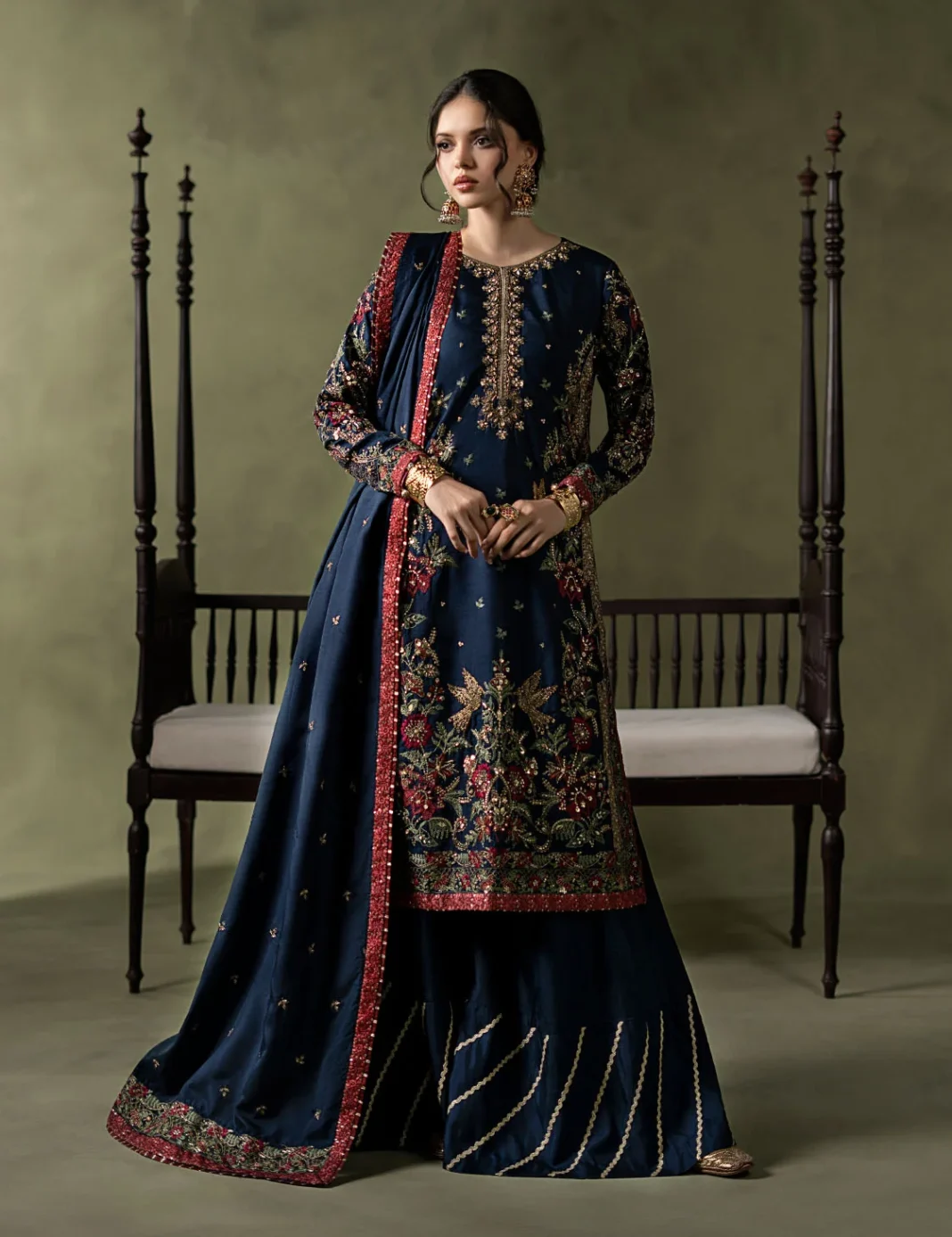
Look closely at the neckline of a Pakistani formal suit. You will often see tiny stitches, metal threads and small beads placed one at a time. That is hand embroidery. It has dressed brides and families in this region for centuries. Today it is the backbone of Pakistani designer wear.
Lahore is one of the busiest centers for this craft. Maria.B., founded in the city in 1999, builds its formal, couture and bridal lines around this kind of detail. So how does a plain length of fabric become a finished designer piece? Here is a simple look at the process, the stitches and what to check before you buy.
What Makes Hand Embroidery Different
Hand embroidery is done by skilled artisans with a needle, thread and plenty of patience. No two pieces come out exactly the same. The stitches sit slightly raised. The threads catch the light in a softer way. On heavier work, you can feel the texture under your fingers.
That depth is hard to copy with a machine. It is also why hand worked outfits cost more. A single bridal piece can take weeks to finish.
From Sketch to Fabric: How a Piece Is Made
Every hand embroidered outfit goes through the same basic steps.
- The design. A designer sketches the motif first. It may draw on Mughal patterns, florals or simple geometric borders.
- The tracing. The sketch is pricked onto paper with tiny holes. This stencil is often called a khaka. Artisans lay it on the fabric and rub chalk or blue powder through the holes. A faint outline stays on the cloth.
- The frame. The fabric is stretched tight on a wooden frame called an adda. This keeps it flat while the work goes on. Several artisans can sit around one large frame.
- The stitching. Karigars, the skilled embroiderers, fill the outline thread by thread. Some work only with metal threads. Others handle beads, sequins or mirrors.
- The finishing. The piece comes off the frame. It is checked, cleaned of tracing marks and pressed. Then it moves on to cutting and stitching.
The Stitches You Will See
Pakistani designer wear uses a handful of classic techniques. Here are the ones you will spot most often.
- Zardozi uses gold or silver metal thread, often with beads and stones. It goes back to the Mughal courts. Today it shows up most on bridal and heavy formal wear.
- Dabka is a fine coiled metal wire. Artisans cut it into small pieces and stitch each one down. The result is raised and shiny.
- Tilla is metallic thread laid on the surface and held in place with small stitches. It is lighter than zardozi and works well on borders.
- Resham is silk thread embroidery. It is soft and colorful, and often used for florals.
- Gota is a woven ribbon of gold or silver. It is stitched along edges and is a favorite for mehndi outfits.
- Mirror work holds small round mirrors in place with a ring of stitches. It has deep roots in Sindh and Balochistan.
- Cutdana uses small cut glass beads. They add sparkle without much weight.
Hand Work vs Machine Work
Most Pakistani brands use both. Machine embroidery is fast and even. It suits lawn and everyday prints, where a clean pattern repeats down the shirt. It also keeps prices friendly.
Hand work takes over where depth matters. Formals, couture and bridal pieces lean on it heavily. Many designer outfits blend the two. A machine embroidered base might carry hand added dabka, beads or sequins at the neckline. This mix gives a finished look at a more reachable price.
How to Spot Good Hand Work When Shopping
A few quick checks will tell you a lot about the quality of an outfit.
- Turn the fabric over. Hand work looks slightly uneven on the back. Machine work shows neat, identical rows.
- Check the edges of each motif. Good work has no loose threads or gaps.
- Look at the beads and sequins. Each one should be stitched down firmly.
- Feel the weight. Heavy zardozi and dabka make a dupatta noticeably heavier.
- Read the product details. Brands usually mention hand embellishment, and the price reflects it.
Caring for Embroidered Pieces
Hand embroidered outfits need gentle care. Dry clean heavy pieces. Never wring them. Iron on the reverse side with a thin cloth in between.
Store each outfit flat or folded in a cotton or muslin cloth. Avoid plastic covers, since they trap moisture and can tarnish metal threads. Keep perfume away from the embroidery too. Spray it on before you get dressed.
Final Word
Every hand embroidered outfit carries hours of human work. Knowing how it is made helps you shop smarter and value what you already own. So the next time you pick a formal or bridal outfit, take a closer look. Turn the fabric over. Feel the stitches. The craft tells its own story in every thread.