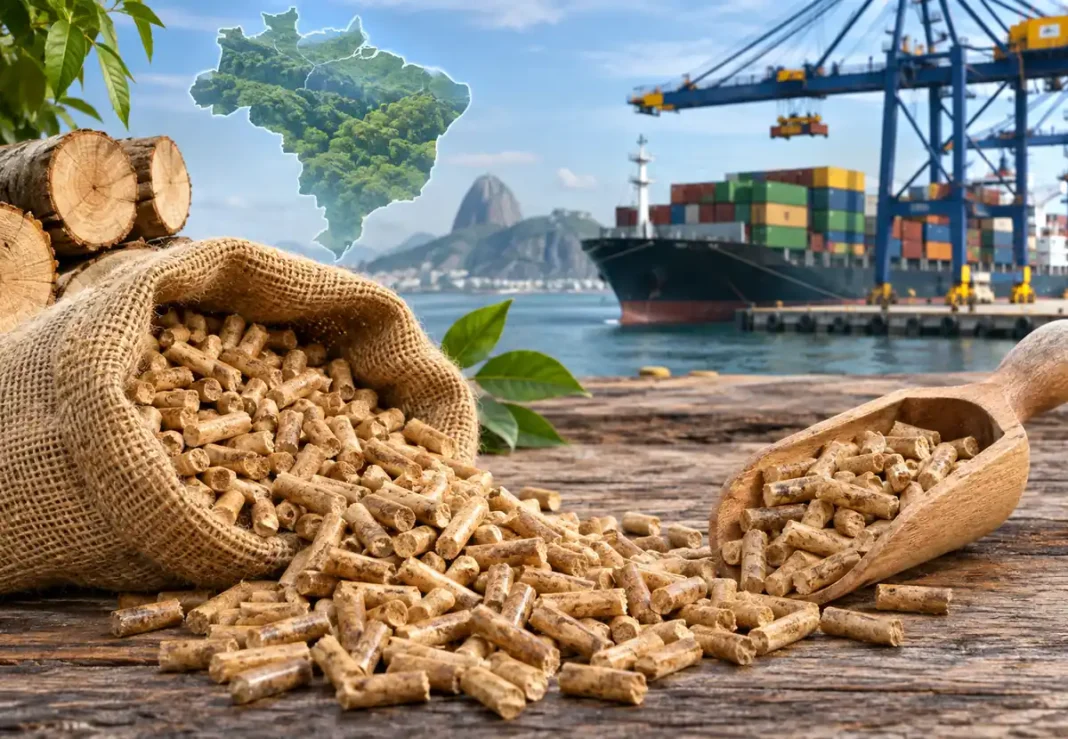
ImportPellet is the wood-pellet sourcing and import research brand used by Mello Commodity to help international buyers investigate suppliers in Brazil. Its main resource is the Brazilian Wood Pellet Suppliers Guide 2026, which brings together research on 17 Brazilian producers, exporters, and trading companies. It is not a wood-pellet certification, an online store, or a service that automatically purchases and ships fuel for customers. Its purpose is to organize supplier discovery and explain the checks involved before a buyer approaches a producer or exporter.
The name can also describe the wider process of importing compressed wood pellets for heating and biomass energy. This broader use explains why some articles treat ImportPellet as a trade term, while others connect it to a specific Brazilian sourcing guide. The distinction helps buyers identify whether they need supplier research or a complete import plan.
What Is ImportPellet and Who Is It For?
Mello Commodity uses ImportPellet for its educational content and research aimed at overseas buyers interested in Brazilian wood pellets. The resource focuses on helping buyers identify potential suppliers, understand quality requirements, compare commercial offers, and prepare for supplier discussions. A buyer still contacts the selected company, negotiates the purchase, arranges inspection, and manages the shipment independently.
A supplier directory and a fuel exporter perform different jobs. A research guide can shorten the time spent finding companies, but it cannot guarantee production capacity, product quality, payment security, or delivery. Treat it as a starting point for due diligence, not proof that a listed supplier suits your order.
What Does the Brazilian Wood Pellet Suppliers Guide Include?
The 2026 guide covers 17 Brazilian businesses selected for international buyers, with companies grouped by their commercial role. That distinction helps because a pellet producer manufactures fuel, an exporter manages overseas sales, and a trading company may coordinate purchases between manufacturers and buyers. Knowing which role a company performs helps you ask the right questions about production, export records, and responsibility for the shipment.
The guide aims to move research toward a supplier conversation. Its stated contents include business contacts, evidence of international-market activity, ENplus information where applicable, an RFQ structure, and a due-diligence checklist. Buyers can use the template to request comparable information instead of sending vague messages that produce inconsistent quotations.
The guide does not replace independent checks. Company details, contacts, certificates, production availability, and commercial terms can change, so buyers should reconfirm them before signing a contract or transferring funds. It also does not act as a customs broker, quality inspector, freight forwarder, or legal adviser for the destination market.
Why Are International Buyers Looking at Brazilian Wood Pellets?
Brazil has become a meaningful origin in the international wood-pellet trade, supported by its forestry and wood-processing industries. The country exported 449,000 tonnes of pellets in 2025, with Italy receiving almost 70% of that volume. This trade activity gives importers a reason to assess Brazilian suppliers, although export growth alone does not prove that any individual producer can meet a buyer’s requirements.
Italy imported approximately 348,000 tonnes of pellets from Brazil in 2025, an increase of 11% from the previous year. Brazilian feedstock can include residues such as sawdust and wood shavings from timber processing, while eucalyptus and pine are important plantation species in the country. Export routes may involve ports such as Paranaguá, Itapoá, Santos, and Rio Grande, but the best route depends on the factory location, vessel schedule, destination port, and freight quotation.
Brazil is one sourcing option, not an automatic low-cost choice. Buyers should compare its offers with suppliers closer to the destination and include freight, handling, duties, and delivery time. The right origin meets the specification at a reliable total cost, not simply the lowest factory price.
Which Wood Pellet Quality Standards Should Buyers Check?
Wood pellets are compressed cylindrical fuel made from woody material such as sawdust and shavings. Manufacturers dry the feedstock and press it into uniform pieces for compatible pellet stoves, boilers, and industrial combustion systems. The required grade depends on the equipment and whether the buyer needs residential or industrial fuel.
ENplus A1 is a premium quality class within the ENplus certification scheme for wood pellets, and its requirements cover measurable properties rather than appearance alone. Key limits include moisture of no more than 10%, ash of no more than 0.7% on a dry basis, mechanical durability of at least 98%, and a diameter of 6 mm or 8 mm with a permitted tolerance. Buyers should also check fines, bulk density, and net calorific value because these properties affect handling, feeding, storage, and heat output.
A certificate must belong to the correct legal company and remain valid for the relevant activity. Check the company name or ENplus ID in the official certification records, confirm whether its status is active, and review the certificate’s scope. Ask for a recent laboratory report for the actual production batch as well, because a supplier’s general certificate does not prove that every shipment meets the agreed specification.
How to Use ImportPellet Before Placing an Order
Write a product specification before contacting suppliers. State the quality class, diameter, packaging, order volume, destination port, delivery window, and sustainability documents required in your market. Giving each supplier the same brief makes quotations easier to compare.
Use the supplier research to create a shortlist, then verify each company’s legal identity and export role. Ask whether it owns the production facility, works as an exporter, or trades pellets made by another business, and request evidence of previous international shipments. Check the company address, official contact details, production capacity, bank beneficiary, and willingness to arrange independent inspection before payment.
Send a formal request for quotation, or RFQ, that asks every shortlisted supplier to price the same specification and delivery basis. Request a sample or recent batch analysis, agree on acceptable tolerances, and define how an independent inspector will check quality, weight, packaging, and loading condition. Put the agreed specification, delivery schedule, claims procedure, inspection rights, and payment milestones into the contract before booking freight.
How Much Does Importing Wood Pellets Really Cost?
A factory price is only one part of the amount an importer eventually pays. Landed cost can include inland transport, export handling, ocean freight, insurance, port charges, duties, taxes, broker fees, inspection, and delivery to the warehouse. Currency movements and seasonal freight demand can also change the economics before shipment.
Compare offers using the same Incoterm, quantity, packaging, loading window, and destination assumptions. FOB generally means the seller delivers the goods on board the nominated vessel at the named port, while CIF includes cost, insurance, and freight to the named destination port, subject to the contract’s precise terms. Do not compare an FOB price directly with a CIF price because the included services and cost responsibilities differ.
A practical landed-cost calculation is the total purchase and logistics expense divided by the tonnes received in acceptable condition. Add inspection and handling costs rather than leaving them outside the comparison, and allow for any loss or damage that could reduce the usable quantity. A low quotation can become an expensive purchase if it arrives late, contains excessive fines, or fails the agreed quality test.
Which Documents, Shipping, and Storage Details Matter?
Most commercial shipments require a commercial invoice, packing list, bill of lading, and customs declaration, while a certificate of origin may support the origin claim or a tariff preference. Depending on the product and destination, authorities may also request phytosanitary documentation or other evidence related to plant health and legal sourcing. Wood pellets commonly fall under HS subheading 440131, but importers must confirm the correct national tariff code and current requirements with their customs broker.
Pellets can move in retail bags, large bags, containers, or bulk vessels, depending on order size and the receiving facility. Protect cargo from rain and condensation because moisture causes swelling, breakage, and excess dust. Agree who is responsible for packaging, dry containers, ventilation, and damage discovered at arrival.
Storage needs attention beyond keeping the product dry. Bulk wood pellets can release carbon monoxide, reduce oxygen levels in enclosed spaces, and create combustible dust, so workers must follow site-specific ventilation, gas-monitoring, dust-control, and confined-space procedures. A buyer should confirm that the receiving warehouse has the equipment and safety procedures required for the planned volume before a vessel arrives.
Is ImportPellet the Right Starting Point for Your Business?
ImportPellet can help buyers considering Brazil who need an organized starting point for supplier discovery. It narrows initial research, structures supplier information, and helps buyers prepare questions before negotiations. It is less suitable for anyone expecting a marketplace that sells fuel, shows live inventory, negotiates contracts, or guarantees shipments.
Use the guide alongside technical review, supplier verification, independent inspection, customs advice, and financial controls. Assess feedstock origin, forestry practices, production energy, transport emissions, and traceability against your sustainability requirements. Renewable feedstock does not automatically make every wood-pellet supply chain carbon-neutral or environmentally responsible.
Conclusion
ImportPellet provides international buyers with a practical starting point for exploring Brazil’s wood pellet market and identifying potential suppliers. Its supplier research, quality guidance, and import preparation resources can help businesses make more informed sourcing decisions before entering commercial negotiations.
However, successful importing requires more than finding a supplier, as buyers must verify certifications, evaluate product quality, calculate landed costs, and arrange reliable transportation. By combining ImportPellet’s research with independent supplier checks and careful import planning, businesses can build a more reliable and cost-effective wood pellet supply chain.
Frequently Asked Questions
What is ImportPellet?
ImportPellet is Mello Commodity’s wood-pellet sourcing research brand, focused on helping international buyers investigate Brazilian suppliers and understand importing requirements.
Does ImportPellet sell wood pellets directly?
No, ImportPellet provides supplier research and importing guidance, while buyers contact producers, exporters, or trading companies directly to negotiate and purchase pellets.
Is ImportPellet an official wood pellet certification?
No, ImportPellet is a sourcing and research brand, whereas ENplus is a separate third-party certification scheme that verifies pellet quality and supply-chain requirements.
How many suppliers are included in the ImportPellet guide?
The Brazilian Wood Pellet Suppliers Guide 2026 covers 17 researched Brazilian producers, exporters, and trading companies, with business information and buyer due-diligence resources.
Why do buyers import wood pellets from Brazil?
Buyers consider Brazil because it has a substantial wood-processing sector, established export activity, and suppliers that may offer suitable pellet grades for overseas markets.
How can I verify an ENplus A1 wood pellet supplier?
Search the supplier’s name or ENplus ID in the official database, confirm its active certificate and scope, and request a current laboratory report for the batch.
What determines the landed cost of imported wood pellets?
Landed cost depends on the pellet price, freight, insurance, port charges, duties, taxes, inspection, customs services, inland transport, and the quantity received in usable condition.