Healthy roots make healthy trees, yet most homeowners never think about what’s happening beneath the soil until a tree starts to decline. By the time yellowing leaves or stunted growth appear above ground, root problems have often been developing for years. Compacted soil, buried root collars, and construction damage are among the most common culprits, and traditional digging methods can make these issues worse rather than better.
That’s where a gentler, more precise approach comes in. Arborwright Tree Care uses advanced techniques that protect root systems while still getting to the heart of the problem. This post breaks down what this process involves, why it matters for the long-term health of your landscape, and when it makes sense to call in a professional team to handle it.
What Happens Beneath the Soil That You Can’t See?
Tree roots need three things to thrive: oxygen, water, and loose, well-aerated soil. When soil becomes compacted from foot traffic, construction equipment, or heavy clay content, roots struggle to access any of these essentials. Over time, compacted soil suffocates roots, slows nutrient absorption, and weakens the tree’s overall structure.
Another common hidden issue is girdling roots, where a root grows in a circular pattern around the trunk instead of spreading outward. Left unaddressed, girdling roots can choke a tree from the inside out, cutting off its own nutrient supply. Buried root flares, improper mulching, and soil grade changes during landscaping or construction projects can also smother roots that need to stay closer to the surface.
The challenge has always been diagnosing and treating these problems without causing additional harm. Traditional excavation methods, like shovels or mechanical diggers, often sever healthy roots in the process of trying to fix the damaged ones. That’s a trade-off no tree should have to make.
How Does Air Spading Work to Protect Tree Roots?
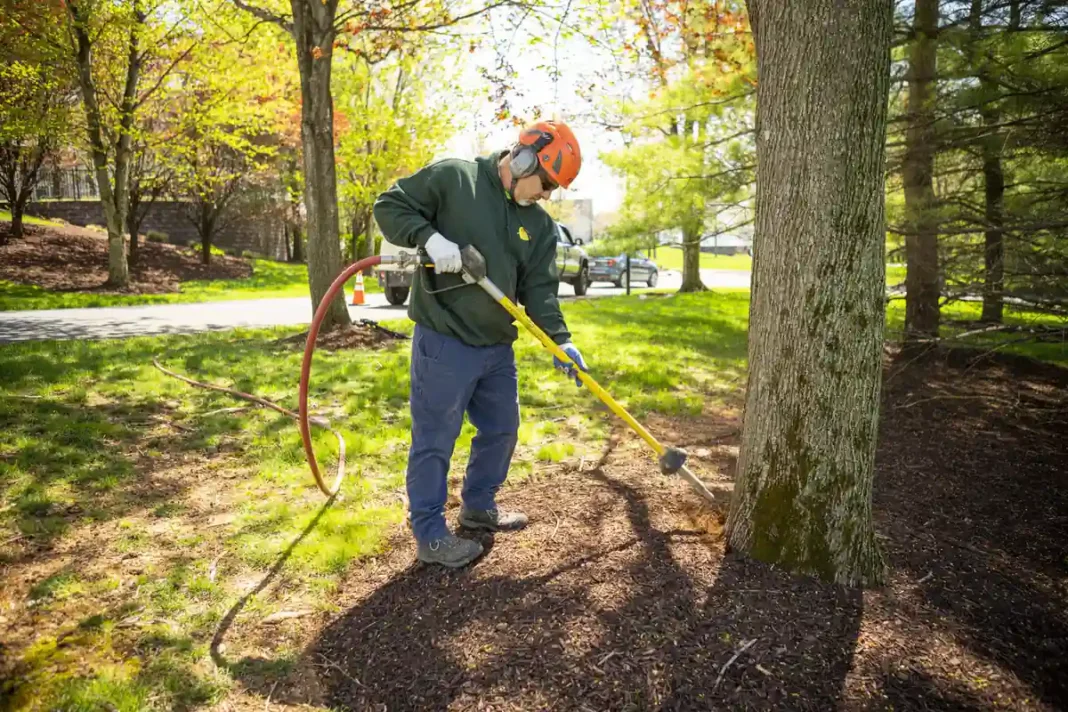
Air spading is a root-friendly technique that uses compressed air to safely loosen and remove soil without damaging the delicate root systems underneath. Instead of cutting through soil with blades or teeth, this method directs a high-velocity stream of air into the ground, breaking up compacted particles and gently blowing them away. The result is an open, visible root zone, with every root left intact.
This precision matters because roots are far more fragile than they look. A single cut from a shovel or trencher can open the door to disease, pest infestation, or structural instability. Air-based excavation sidesteps that risk entirely. Arborists can inspect root flares, identify girdling roots, and assess decay or damage with a level of clarity that digging simply can’t match.
The technique also allows for targeted treatment. Once the soil is cleared, certified arborists can correct girdling roots, improve soil composition, install aeration systems, or address drainage issues directly at the source. It’s a hands-on diagnostic and treatment process rolled into one, and it’s become a go-to solution for arborists who take root health seriously.
When Should You Consider This Service for Your Trees?
Several warning signs suggest it might be time to have your tree’s root system evaluated. Thinning canopies, slowed growth, leaning trunks, or soil that stays unusually wet or dry near the base can all point to problems below the surface. Trees situated near recent construction, new sidewalks, or changed grading are especially vulnerable, since even minor shifts in soil depth can bury the root flare and trigger decline.
Mature trees with visible girdling roots or those that have struggled to establish themselves after a transplant also benefit greatly from this kind of inspection. The sooner root issues are caught, the more treatment options remain on the table. Waiting until a tree shows severe stress often narrows the path to recovery.
Arborwright Tree Care’s team evaluates each tree individually, considering species, age, soil conditions, and surrounding landscape features before recommending treatment. Not every tree needs this kind of intervention, but for the ones that do, catching problems early can mean the difference between a full recovery and a tree that never regains its former health.
What Makes This the Right Choice for Long-Term Tree Health?
Choosing a method that preserves root integrity pays off well beyond the initial treatment. Trees that receive this kind of careful root care tend to show improved vigor, stronger anchorage, and better resistance to drought and disease in the years that follow. Because the process avoids unnecessary root damage, trees can redirect their energy toward recovery and growth instead of healing from excavation injuries.
There’s also a cost-saving angle worth considering. Addressing root problems early, before they escalate into structural failures or require tree removal, is almost always less expensive than dealing with a hazardous or dying tree later on. A thriving, well-rooted tree adds lasting value to a property, both in curb appeal and in the shade, privacy, and environmental benefits it provides.
Arborwright Tree Care’s certified arborists bring the training and equipment needed to perform this work safely and effectively, ensuring that each tree gets exactly the care its root system requires. From diagnosis to treatment, the goal is always the same: healthier roots, stronger trees, and landscapes that last for generations.
Give Your Trees the Root Care They Deserve
Strong trees start with strong roots, and protecting that foundation is one of the best investments a property owner can make. If your trees are showing signs of stress or you’ve recently had construction work done nearby, don’t wait for the damage to become irreversible. Reach out to Arborwright Tree Care to schedule a root system evaluation and find out whether this gentle, effective treatment could help your trees thrive for years to come.