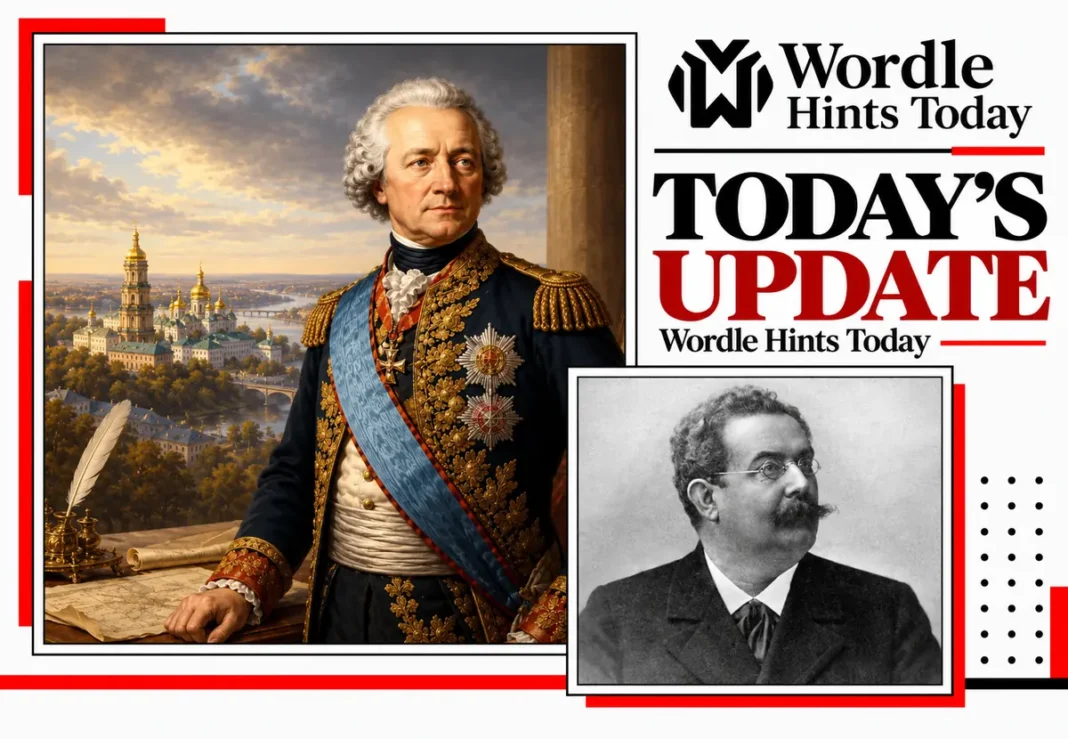
Bernhard Weißbach is a name closely associated with Johann Bernhard von Weisbach (1665–1735), a European military commander who served the Russian Empire under Peter the Great. He fought in the Great Northern War, commanded cavalry at the Battle of Poltava, carried out diplomatic assignments, and eventually became Governor-General of Kyiv. His career connected him with some of the most important political and military developments of the early eighteenth century.
However, historical records also identify other individuals named Bernhard Weißbach, including a German man born in 1924. Understanding these separate identities helps explain why information about the name sometimes appears inconsistent.
How Bernhard Weißbach Became Known Through the Battle of Poltava
The most historically prominent figure associated with Bernhard Weißbach earned his reputation through military service rather than entertainment or public celebrity. Johann Bernhard von Weisbach joined the Russian army in 1707, when Peter the Great was fighting Sweden for influence across Northern and Eastern Europe. His experience as a cavalry officer quickly made him useful to the Russian command.
His military reputation grew during the Great Northern War, particularly through his ability to lead mounted troops. At Tykocin, he successfully withdrew a Russian garrison despite the nearby Swedish army. His actions helped him gain recognition from Peter the Great and contributed to his advancement through the military ranks.
His Role in the Battle of Poltava in 1709
The Battle of Poltava took place in June 1709 between the forces of Peter the Great and Sweden’s King Charles XII. The Russian victory seriously weakened Swedish military power and changed the political balance of Northern Europe. Weisbach participated as a cavalry commander on the Russian right flank.
During the fighting, Weisbach suffered an injury but continued serving with his troops. He also participated in the pursuit of retreating Swedish forces toward Perevolochna. Following the campaign, Peter promoted him to the rank of major general.
Poltava became one of the defining events of Weisbach’s career because it established his place among the officers who helped Peter build Russian military power. His subsequent assignments show that the Russian government continued to rely on his experience. Over the following decades, he moved from battlefield command into diplomacy and regional administration.
From Military Commander to Diplomat and Governor-General of Kyiv
Weisbach’s career did not end with the fighting at Poltava. He participated in the Pruth campaign of 1711 and later received responsibility for defending Ukrainian territory against raids by Crimean Tatar forces. In 1713, he achieved a military success near Bohodukhiv.
Between 1715 and 1717, he served with Russian forces operating in Poland. He subsequently returned to military responsibilities in Ukraine and advanced to lieutenant general. These appointments expanded his experience beyond individual battles and gave him responsibility for larger military formations.
The 1719 Diplomatic Mission to Vienna
In 1719, Peter the Great sent Weisbach to Vienna on a diplomatic assignment involving the Habsburg court. His responsibilities included addressing political disagreements and inviting Duke Karl Friedrich of Holstein-Gottorp to Russia. This mission connected the general directly with European royal diplomacy.
Karl Friedrich later married Anna Petrovna, the daughter of Peter the Great, in 1725. Their marriage strengthened the connection between the Russian imperial family and the House of Holstein-Gottorp. Weisbach’s earlier diplomatic assignment formed part of the political relationship that developed between these ruling houses.
The marriage also coincided with an important stage in Weisbach’s military career. On May 21, 1725, Empress Catherine I promoted him to general of cavalry. His advancement demonstrated how military service and royal diplomacy could overlap within the Russian imperial court.
His Appointment as Governor-General of Kyiv
In 1720, Weisbach received command responsibilities in the region that imperial authorities called Little Russia, covering parts of modern Ukraine. He also became involved in the Russian Empire’s military administration and served in the Military Collegium. These duties placed him at the center of important decisions concerning the empire’s southwestern territories.
In 1729, he represented Russian interests at the Grodno congress in the Polish-Lithuanian Commonwealth. He received the Order of St. Alexander Nevsky in 1730 and gained the title of count from Holy Roman Emperor Charles VI around this period. His diplomatic responsibilities continued as European powers competed for political influence in Poland.
On November 11, 1731, Weisbach became Governor-General of Kyiv. He held the position until his death in 1735, combining government responsibilities with continued military service. His appointment placed him within the Russian imperial administration of Ukrainian territory during a period of increasing central control.
What Is Known About Bernhard Weißbach’s Wife and Family?
Historical documents establish that Johann Bernhard von Weisbach had a wife, although they do not clearly identify her name or provide a complete account of her life. Correspondence from 1719 discusses accommodation, provisions, and rations for his wife and accompanying household. These details offer a rare glimpse of his personal circumstances outside the military.
Another letter from 1719 involved Baron Peter Shafirov, a Russian diplomat who communicated with Hetman Ivan Skoropadsky. Shafirov requested consideration for Countess Weisbach and her entourage while the general attended to imperial business. The correspondence shows that Weisbach’s official responsibilities also affected arrangements for his household.
Did Bernhard Weißbach Have Children?
The surviving biographical material does not securely establish the names or life histories of Weisbach’s children. His parents and siblings also remain poorly documented, making it difficult to construct a reliable family tree. Shared surnames in military and aristocratic records do not automatically establish family relationships.
His marriage remains the clearest personal relationship documented in the available historical material. The letters concerning his wife show that she had a household requiring support during his absences. However, the evidence does not establish her birthplace, education, career, or later life.
His Relationships With Important Political Figures
Weisbach’s professional relationships extended well beyond the Russian imperial court. He communicated with Ukrainian hetmans, including Ivan Skoropadsky and Danylo Apostol, whose offices operated during a period of expanding Russian influence over the Cossack Hetmanate. These connections placed him within the political networks that governed Ukrainian territory.
In 1732, Weisbach wrote to Hetman Danylo Apostol on behalf of Colonel Galagan regarding an additional village for the colonel’s estates. The correspondence shows that Weisbach participated in matters involving land and influential regional officers. His responsibilities therefore extended beyond military command into the practical affairs of local government.
The Ukrainian Village That Preserved the Weisbach Name
One of the lesser-known parts of Johann Bernhard von Weisbach’s legacy concerns his landholdings in Ukraine. He acquired estates in the Pryluky region, including properties associated with Weisbachivka, Mamaivka, and Riashky. His ownership connected his name with the local landscape long after his military career ended.
The village now known as Bilorichytsia once carried the name Weisbachivka, reflecting its association with the general. Local historical accounts place his acquisition of the property in either 1717 or 1727, with the later date also appearing in regional historical works. Regardless of the precise purchase year, the village retained a name associated with him for generations.
What Happened to His Estates After His Death?
Weisbach’s Ukrainian properties did not simply disappear from the historical record after 1735. Empress Anna Ioannovna transferred his former estates to Field Marshal Burkhard Christoph von Münnich, another prominent military commander in Russian service. The transfer connected Weisbach’s property history with the career of a different imperial military leader.
The village of Weisbachivka retained its historical name until 1945, when Soviet Ukrainian authorities renamed it Bilorichytsia. The modern village lies in the Pryluky district of Ukraine’s Chernihiv region. Its earlier name provides a direct connection between a local community and the eighteenth-century general.
This geographical legacy adds an important dimension to Weisbach’s biography. His influence did not come exclusively from military victories or court appointments. Landownership also tied his career to the social and political history of Ukrainian communities.
Bernhard Weißbach’s Early Life and Education
Johann Bernhard von Weisbach was born in 1665 in Bohemia, then part of the Habsburg lands. Historical material also connects his background with the German-speaking Catholic military environment of Central Europe. His life began long before he entered Russian service.
Details about his parents, childhood, and formal education remain limited. His early professional experience came through service in the Austrian military, where he developed the skills that later supported his career as a cavalry commander. By 1707, he had enough military experience to enter Russian service as a lieutenant colonel with responsibility for a dragoon regiment.
His move to Russia occurred when Peter the Great was recruiting experienced foreign officers to strengthen his armed forces. Heinrich von Huyssen, a German scholar and diplomat who worked for Peter, helped recruit foreign military professionals for Russian service. Weisbach belonged to this broader movement of Central European officers who built careers within the expanding Russian military establishment.
His Military Awards and Achievements
Weisbach received several important honors during his decades of imperial service. These decorations recognized his military rank and his value to the Russian government. His record includes both battlefield achievements and diplomatic appointments.
Among his notable distinctions were the Order of St. Alexander Nevsky, which he received on August 30, 1730, and the Order of St. Andrew the First-Called, awarded in 1733. He also held the rank of general of cavalry and received a count’s title from Charles VI. These honors placed him among the senior military and political figures of his time.
His appointment as Governor-General of Kyiv stands alongside these decorations as a significant career achievement. He continued holding substantial responsibilities after Peter the Great died in 1725. His service under successive rulers shows that his official career extended beyond his original patron’s reign.
Bernhard Weißbach’s Death and Final Military Assignment
In 1735, Weisbach received orders to prepare a major military expedition into Crimea in response to Crimean Tatar raids. Historical military accounts describe a force numbering roughly 20,000 to 25,000 troops. The planned campaign would have extended his military responsibilities into another major conflict.
He died on August 24, 1735, before the expedition began. He was in Poltava, the city associated with his most famous military campaign, and received his burial there. His death ended a career that had continued for nearly three decades in Russian service.
Weisbach’s final assignment also reveals the strategic importance of Ukraine and Crimea within eighteenth-century imperial politics. Russian commanders focused heavily on defending southern territories and controlling military movements across the region. Weisbach remained involved in these affairs until the end of his life.
Other Historical Records Connected to the Name Bernhard Weißbach
Not every historical mention of Bernhard Weißbach concerns Johann Bernhard von Weisbach. German records identify other individuals with the same or similar names, including people whose lives belong to entirely different centuries. Separating these identities matters when examining birth dates, family details, and professional achievements.
Bernhard Weißbach and the 1950 Soviet Military Tribunal
A documented German individual named Bernhard Weißbach was born on May 12, 1924, in Schreibersdorf, now identified as Pisarzowice. His personal record concerns a Soviet military tribunal proceeding in Dresden on February 18, 1950. The tribunal imposed a sentence of 25 years under Articles 58-6 and 58-11 of the Russian Soviet criminal code.
His imprisonment record identifies Dresden’s Münchner Platz and Bautzen I. Decades later, the Chief Military Prosecutor’s Office of the Russian Federation issued a rehabilitation decision dated November 17, 1994. This history concerns a twentieth-century individual and has no biographical connection to the eighteenth-century general.
The available record does not establish his complete professional history, marriage, children, or date of death. It also does not provide enough information to describe his activities before or after imprisonment in detail. His documented life should therefore remain separate from that of Johann Bernhard von Weisbach.
Another Bernhard Weißbach in East German Technology
The name Bernhard Weißbach also appears in connection with East German scientific and industrial achievement. In 1986, an individual with this name received recognition as a member of a development collective associated with the German Democratic Republic’s National Prize for Science and Technology, Second Class. The group’s work concerned advances in industrial technology.
The award listing connects Bernhard Weißbach with the development of a modular operating system for industrial robots and universal microcomputer controls. Its participating organizations included institutions and industrial enterprises in Karl-Marx-Stadt, now Chemnitz. The available details do not establish a relationship between this prize recipient and the man documented in the 1950 tribunal case.
Was Bernhard Weißbach Wealthy or Famous?
Johann Bernhard von Weisbach held influential military and government positions, received prestigious imperial honors, and owned estates in Ukraine. These circumstances establish that he occupied a privileged position within eighteenth-century society. However, no reliable financial record provides a modern calculation of his personal net worth.
He also did not belong to the world of celebrity in the contemporary sense. His public recognition came from military command, royal diplomacy, government administration, and landownership. Those activities explain why historians can document important parts of his career while leaving much of his private life unresolved.
The twentieth-century individuals with the same name also lack verified public net-worth figures. Assigning their financial circumstances or personal histories to the general would create a misleading biography. Each person’s identity requires its own historical context.
Conclusion
Bernhard Weißbach is best understood as a historical name with several distinct identities, the most prominent being Johann Bernhard von Weisbach. His military service under Peter the Great, participation in the Battle of Poltava, diplomatic mission to Vienna, and later appointment as Governor-General of Kyiv make him an important figure in eighteenth-century imperial history.
His story also extends beyond official titles. Letters concerning his wife, correspondence with Ukrainian leaders, and the village once known as Weisbachivka reveal connections that conventional military biographies can easily overlook. These details help explain how his public responsibilities affected his household and how his influence continued through local history.
The existence of other people named Bernhard Weißbach adds another reason to examine the name carefully. By distinguishing the general from the twentieth-century individuals who shared his name, a more accurate picture emerges of his career, family circumstances, and lasting historical significance.
More Celebrity Profiles: Jeannine Belleguic: Her Family, Husband and Life in Brittany
Frequently Asked Questions
Who was Bernhard Weißbach?
Bernhard Weißbach is a name commonly associated with Johann Bernhard von Weisbach, an eighteenth-century military general, diplomat, and Governor-General of Kyiv who served the Russian Empire.
When was Bernhard Weißbach born?
Johann Bernhard von Weisbach was born in 1665 in Bohemia, while a different individual named Bernhard Weißbach was born on May 12, 1924, in Schreibersdorf.
What made Bernhard Weißbach famous?
Johann Bernhard von Weisbach became historically notable for commanding cavalry during the Great Northern War, participating in the Battle of Poltava, and later governing Kyiv.
Was Bernhard Weißbach married?
Johann Bernhard von Weisbach was married, as correspondence from 1719 discusses arrangements for his wife and household, although her name remains unconfirmed in the available historical material.
Did Bernhard Weißbach have any children?
The available historical records do not reliably identify children of Johann Bernhard von Weisbach, so no verified family tree can establish their names or individual life histories.
What awards did Bernhard Weißbach receive?
Johann Bernhard von Weisbach received the Order of St. Alexander Nevsky in 1730 and the Order of St. Andrew the First-Called in 1733.
When did Bernhard Weißbach die?
Johann Bernhard von Weisbach died on August 24, 1735, in Poltava while preparing for a military expedition into Crimea, and he received his burial in Poltava.
What was Bernhard Weißbach’s net worth?
No reliable financial records establish a net-worth figure for Johann Bernhard von Weisbach, although historical information confirms that he held high-ranking offices and owned estates in Ukraine.