Flickering lights, tripped breakers, and warm outlets aren’t just annoyances — they’re warning signs. Your electrical panel is the heart of your home’s power system, and when it can’t keep up with modern demands, it shows. If you’ve noticed any of these red flags, it might be time to consider an upgrade.
At Boudreaux’s Electrical Services, we’ve helped countless homeowners replace outdated, overworked panels with safer, more reliable systems built for today’s energy needs. Whether you’re adding a home office, installing an EV charger, or simply tired of resetting breakers every time you run the microwave and the toaster at once, a panel upgrade can solve the problem for good.
In this post, we’ll walk through the signs that your panel needs attention, what the upgrade process actually involves, and why trusting a professional electrician makes all the difference.
What Are the Warning Signs of an Outdated Electrical Panel?
Many homeowners don’t think about their electrical panel until something goes wrong. But your panel often gives warning signs long before a serious issue occurs. Watch for these common indicators:
- Frequent breaker trips. If your breakers trip regularly, your panel may be struggling to handle your home’s electrical load.
- Flickering or dimming lights. This can signal that your panel isn’t distributing power evenly or consistently.
- Burning smells or discoloration. Any scorch marks, rust, or odd smells near your panel should be treated as an emergency.
- A panel over 25 years old. Older panels, especially those made by brands no longer in production, often lack the safety features modern systems include.
- Difficulty adding new circuits. If your electrician tells you there’s no room to add outlets or circuits, your panel may be at capacity.
Ignoring these signs doesn’t just risk inconvenience — it increases your risk of electrical fires, appliance damage, and costly emergency repairs down the road.
How Has Home Energy Use Changed — and Why Does Your Panel Matter?
Homes today run on far more electricity than they did even a decade ago. Smart thermostats, multiple streaming devices, home security systems, electric vehicles, and energy-efficient HVAC systems all draw power simultaneously. Many older panels, particularly those rated for 60 or 100 amps, simply weren’t designed to support this level of demand.
A modern panel upgrade typically increases capacity to 150 or 200 amps, giving your home the breathing room it needs to support current and future electronics without constant strain. This isn’t just about convenience — it’s about protecting your investment. Appliances that receive inconsistent or insufficient power often wear out faster, costing you more in replacements and repairs over time.
What Does the Panel Upgrade Process Actually Involve?
A professional panel upgrade is more involved than simply swapping one box for another. Here’s what homeowners can generally expect:
Initial Inspection and Assessment
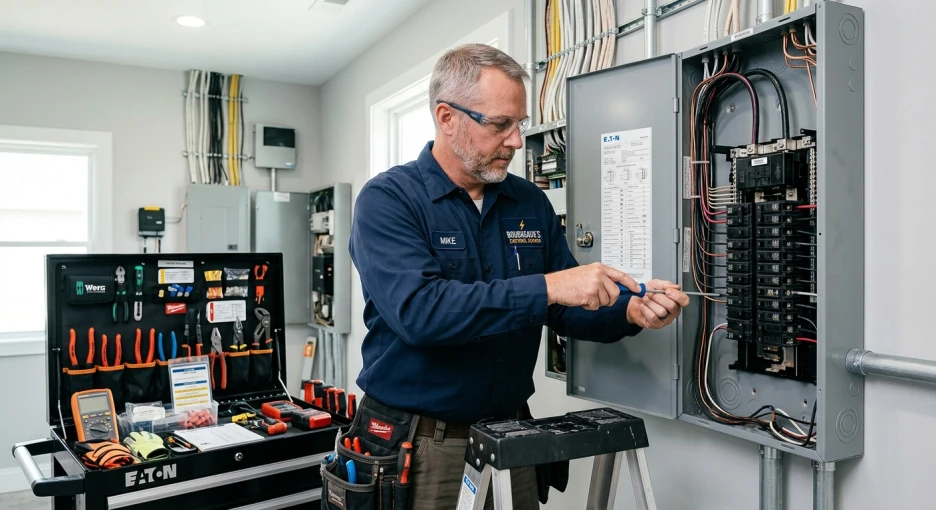
A licensed electrician will evaluate your current panel, wiring, and household electrical needs. This step identifies any underlying issues, such as outdated wiring or code violations, that should be addressed alongside the upgrade.
Permitting and Code Compliance
Panel upgrades typically require permits and must meet local electrical codes. A reputable electrical company handles this process for you, ensuring the work is properly documented and inspected.
Installation
During installation, your electrician will disconnect power, remove the old panel, and install the new one along with any necessary breakers. This process usually takes a few hours to a full day, depending on the complexity of the job.
Final Inspection
Once installed, the new panel is tested and typically inspected by a local authority to confirm it meets safety standards.
What Are the Benefits of Upgrading Your Electrical Panel?
Beyond simply resolving immediate issues like tripped breakers, a panel upgrade offers long-term advantages:
- Improved safety. Modern panels include better circuit protection, reducing fire risk.
- Increased home value. Updated electrical systems are a selling point for prospective buyers.
- Support for future upgrades. Whether you’re planning a home addition or installing solar panels, a modern system provides the foundation you’ll need.
- Fewer disruptions. No more resetting breakers mid-movie night or losing power when you run the dryer and dishwasher together.
- Better insurance standing. Some insurance providers offer better rates for homes with updated electrical systems, since they pose a lower fire risk.
Why Work With a Professional Electrician for This Upgrade?
Protecting your home and family while ensuring every circuit is built to handle tomorrow’s power demands starts with hiring a licensed, experienced electrician — not a DIY approach or an unlicensed contractor. Electrical Panel Upgrades involve working with high-voltage systems, and mistakes can lead to fire hazards, code violations, or voided insurance claims.
At Boudreaux’s Electrical Services, our licensed electricians bring years of hands-on experience to every job. We take the time to assess your home’s specific needs, explain your options clearly, and complete the work with minimal disruption to your daily routine. From the initial inspection to the final walkthrough, our goal is to leave you with a safer, more capable electrical system you can rely on for years to come.
Ready to Upgrade Your Home’s Electrical System?
An outdated panel doesn’t just limit your home’s electrical capacity — it puts your family’s safety at risk. If you’ve noticed warning signs like frequent breaker trips, flickering lights, or difficulty adding new circuits, don’t wait for a bigger problem to develop.
Reach out to Boudreaux’s Electrical Services today to schedule an inspection. Our team will assess your current system, walk you through your options, and help you choose the right solution for your home’s needs — now and in the future.