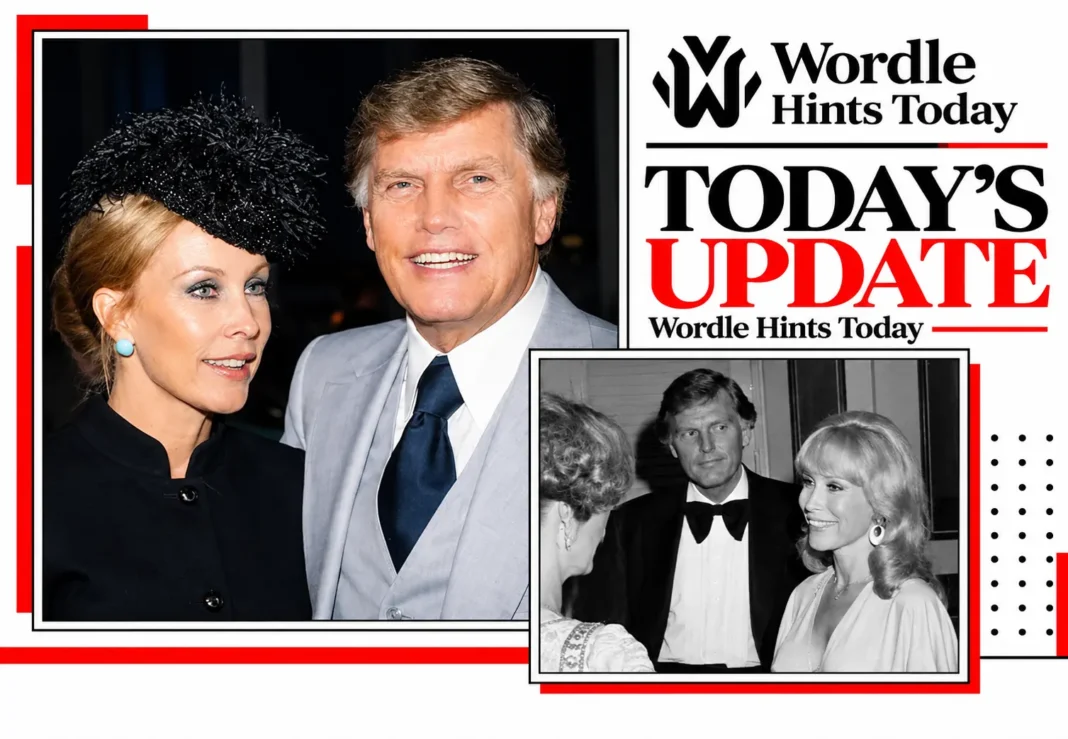
Charles Donald Fegert was an American newspaper advertising and publishing executive whose name became widely recognized because of his marriage to actress Barbara Eden. Long before he entered Eden’s personal history, Fegert had built a substantial career in Chicago’s newspaper industry, working in advertising, marketing, and executive management for the Chicago Sun-Times and Chicago Daily News.
By the early 1980s, contemporary reporting identified him as executive vice president of the Chicago Sun-Times. His marriage to Eden began on September 3, 1977, but the relationship ended after several difficult years, with published biographical records placing the divorce in either 1982 or 1983. Eden later described serious problems in the marriage in her memoir, making their relationship the defining reason people continue to search for Fegert today.
Quick Facts About Charles Donald Fegert
| Field | Details |
| Full Name | Charles Donald Fegert |
| Profession | Newspaper advertising, marketing and publishing executive |
| Spouse | Barbara Eden |
| Marriage | September 3, 1977 |
| Children With Barbara Eden | None publicly documented |
Charles Fegert Had a Career Before Barbara Eden
Charles Fegert’s professional identity existed independently of Hollywood. His documented career centered on the commercial side of major Chicago newspapers, where advertising and marketing formed an important part of the publishing business. That distinction matters because later internet biographies sometimes reduce him to Barbara Eden’s former husband, even though contemporary records show that he had already reached a significant management position before their marriage.
One of the clearest records of Fegert’s career dates to February 1972. The Congressional Record identified him as the advertising manager for both the Chicago Sun-Times and the Chicago Daily News. His name appeared during a discussion of an advertising policy adopted by the two newspapers, showing that his responsibilities extended beyond ordinary sales work into questions surrounding commercial standards.
Fegert’s career continued to advance during the 1970s. Contemporary material later identified him as a marketing executive for the Chicago Sun-Times, while wedding coverage described him as a vice president of Field Enterprises, the company associated with the two newspapers. By 1980, The Washington Post described him as executive vice president of the Chicago Sun-Times, a title it used again when mentioning him in 1981.
His career therefore provides an important part of the Charles Donald Fegert story that celebrity biographies often overlook. He was already an established Chicago newspaper executive when he became connected to Eden. The marriage expanded his public visibility, but it did not create the professional reputation he had spent years developing.
The Chicago Newspaper World Shaped Fegert’s Public Identity
Fegert worked during an important period for Chicago’s newspaper industry. The Chicago Sun-Times and Chicago Daily News operated within the Field Enterprises publishing structure, placing Fegert in a large commercial organization rather than a small local publication. His responsibilities involved the advertising and marketing side of an industry that depended heavily on commercial revenue.
His 1972 advertising position also placed him close to decisions that affected how newspapers presented themselves to readers and advertisers. The Congressional Record reference came after the two newspapers adopted a policy concerning certain offensive entertainment advertisements. A member of Congress specifically discussed Fegert while praising the newspapers’ decision, giving an unusually clear glimpse into the importance of his position.
By 1977, Fegert’s professional title had evolved as his responsibilities expanded. An archival photograph from that year identified him as a marketing executive for the Chicago Sun-Times, while contemporary wedding coverage connected him with Field Enterprises. His progression from advertising manager to senior executive shows that his career had momentum of its own before his marriage attracted national entertainment attention.
The Chicago Daily News later ceased publication in 1978, leaving the Sun-Times as the continuing newspaper most closely associated with Fegert’s later documented career. By the beginning of the 1980s, he was being identified publicly as the Sun-Times’ executive vice president. That progression gives his biography a stronger professional foundation than the familiar description of him simply as Barbara Eden’s second husband.
Barbara Eden Became the Defining Chapter of His Life
Barbara Eden was already famous when she married Fegert. Her portrayal of Jeannie on I Dream of Jeannie had made her one of television’s most recognizable stars, while Fegert’s public reputation came from Chicago’s newspaper business. Their relationship therefore brought together two very different professional worlds.
The couple married on September 3, 1977, near Chicago. Contemporary wedding coverage identified Fegert as a vice president of Field Enterprises, reinforcing the fact that Eden’s new husband had a senior business career of his own. Photographs from the period also captured the couple together at Fegert’s Chicago office shortly before their wedding.
For a time, the marriage placed Fegert in a much more visible social and entertainment setting. National newspaper coverage mentioned him in connection with Eden and continued to identify him by his professional title. The Washington Post, for example, described Eden as the wife of Chicago Sun-Times executive vice president Charles Fegert in its 1980 coverage of Washington’s Gridiron festivities.
That combination of celebrity marriage and executive career explains why Fegert remains an interesting historical figure. He was not an actor attempting to enter Eden’s world, nor was he a Hollywood producer or manager. He was a Chicago media executive whose personal life suddenly became connected to one of television’s biggest stars.
Why Did Charles Fegert and Barbara Eden Divorce?
The end of the marriage is the most discussed part of Fegert’s biography because Eden later provided a detailed personal account of what happened. In her 2011 memoir, Jeannie Out of the Bottle, Eden described the relationship as becoming increasingly troubled after their marriage. Her account included allegations of verbal and physical abuse as well as problems involving substance use.
Those claims represent Eden’s firsthand account of the marriage rather than independently adjudicated findings about Fegert. No comparable public memoir from Fegert provides his perspective on the relationship. The distinction matters because much of the modern discussion of their marriage relies on Eden’s recollections rather than a complete record from both spouses.
The marriage appears to have broken down around 1982, although published biographical references differ on whether 1982 or 1983 should be treated as the divorce year. Some accounts describe the separation in 1982, while established biographical references list the divorce as occurring in 1983. The safest description is that the marriage ended in the early 1980s after roughly five years.
Eden eventually moved forward with her life and married real-estate developer Jon Eicholtz in 1991. Fegert, meanwhile, largely disappeared from the entertainment coverage that had followed him during his marriage. That contrast helped make the relationship itself the lasting public story attached to his name.
Charles Fegert and Barbara Eden Did Not Have Children Together
Charles Fegert and Barbara Eden did not have children together during their marriage. Eden’s only widely documented child was her son Matthew Ansara, who was born during her earlier marriage to actor Michael Ansara. Matthew therefore was not Fegert’s biological child.
Matthew Ansara later pursued acting and experienced serious substance-use difficulties. He died in 2001 at the age of 35, about a year before Fegert’s reported death. His death became one of the most painful events in Eden’s later life and formed another significant part of the personal story she discussed publicly.
Online biographies sometimes claim that Fegert had children from another relationship and provide names for those supposed children. Those claims are inconsistent across available accounts and lack sufficiently strong public documentation to establish a reliable family profile. For that reason, specific names, occupations, and family relationships should not be presented as confirmed facts.
The absence of reliable family records is an important part of understanding Fegert’s biography. His professional career and marriage to Eden are substantially easier to document than his private family life. Repetition across celebrity websites does not by itself turn uncertain genealogical claims into established facts.
What Is Known About Charles Fegert’s Parents and Siblings?
Public information about Fegert’s parents and siblings is too inconsistent to support detailed profiles of individual relatives. Several modern biography websites identify possible parents and a brother, but the available accounts do not provide enough dependable documentation to establish their identities, occupations, or relationships with confidence. Those details are therefore better left out rather than presented as fact.
The limited family record also explains why Fegert’s biography can look unusually different from one website to another. His professional life generated contemporary newspaper and government records, while much of his private life remained outside the public spotlight. Later websites have attempted to fill those gaps, sometimes repeating details that cannot be independently established.
That does not mean Fegert had no documented family history. It means the publicly accessible evidence does not support the kind of detailed mini-profiles that can responsibly be written about his parents or siblings. A careful biography should distinguish between a traceable historical record and information that survives mainly through repeated online claims.
Charles Donald Fegert’s Later Life and Death
After his divorce from Eden, Fegert largely disappeared from national entertainment coverage. The available record provides far less information about his later professional activities, relationships, retirement, or private life than it does about the years surrounding his marriage. His name remained connected to the Chicago newspaper industry and to Eden’s biography, but he did not maintain the public profile that followed his former wife.
Several genealogy and biography records report that Fegert died in 2002. A commonly reported date is September 25, 2002, in Chicago, with November 8, 1930, frequently given as his birth date. Because the underlying public documentation is limited and secondary accounts do not consistently provide an original death record or contemporary obituary, those exact dates should be treated with appropriate caution.
His reported age at death was 71 if the commonly published birth and death dates are used. The available public record does not establish a reliable cause of death. Claims about specific illnesses or circumstances should therefore not be treated as established information.
The relative silence surrounding Fegert’s final years is consistent with his overall public identity. He became famous through association with Barbara Eden rather than through a career designed for public attention. Once that marriage ended, there was little reason for entertainment publications to continue following his personal life.
Charles Fegert’s Net Worth Was Never Reliably Established
Charles Fegert held senior positions in newspaper advertising and publishing, which indicates a successful professional career. However, no reliable public financial record establishes the value of his personal estate, investments, property, or accumulated wealth. Online estimates therefore should not be treated as confirmed net worth figures.
Some modern websites assign specific dollar amounts to Fegert’s wealth. Those numbers generally appear without estate documents, financial statements, or other evidence capable of establishing their accuracy. A precise net worth figure would therefore create an appearance of certainty that the public record does not support.
What can reasonably be said is that Fegert reached senior executive status within a major metropolitan newspaper organization. His career likely provided substantial professional standing, but that does not allow his personal wealth to be calculated responsibly. His financial legacy remains undocumented in publicly reliable detail.
The Career Connections That Put Fegert in the Public Record
Fegert’s strongest professional connections were with the Chicago Sun-Times, Chicago Daily News, and Field Enterprises. These organizations form the clearest network of entities surrounding his working life. They also help explain why contemporary records described him in increasingly senior advertising, marketing, and executive roles.
The most significant individual connection in his professional record was publisher Marshall Field. Fegert’s name appeared alongside Field during the 1972 Congressional Record discussion of advertising policy, placing him within the leadership structure of the newspapers. The available record does not support a broader personal biography of their relationship, but it clearly establishes a professional connection.
Barbara Eden became the most important personal connection in Fegert’s public life. Her television fame ensured that newspapers and entertainment publications continued to identify him after their wedding. Even when coverage focused on Eden, Fegert was frequently described by his own professional title, showing that his executive career remained part of the public record.
Fegert’s relationship with Eden also indirectly connected him to Michael Ansara and Jon Eicholtz, the actors and professionals who occupied the other major chapters of Eden’s married life. Those relationships belong primarily to Eden’s biography, however, rather than Fegert’s own career. The strongest connection remains his five-year marriage to Eden.
What Charles Donald Fegert Is Remembered For
Charles Donald Fegert occupies an unusual place in celebrity history because his fame came from a relationship while his career belonged to another world. He was a Chicago newspaper executive who reached senior management in advertising and marketing before becoming associated with one of television’s most recognizable actresses. His professional achievements can be traced through contemporary records rather than celebrity gossip.
At the same time, his marriage to Eden became the central reason his name survived in popular searches. Eden’s later memoir transformed a relatively obscure marriage into a significant part of her personal story. Her account of the relationship has consequently shaped much of the modern public understanding of Fegert.
That creates a biography with two distinct sides. One is the documented executive who worked his way through Chicago’s newspaper business, while the other is the private man whose marriage became troubled and ended in divorce. Neither side completely explains him alone, but together they account for why Charles Donald Fegert remains a subject of interest.
Conclusion
Charles Donald Fegert was more than Barbara Eden’s former husband, although that relationship remains the main reason his name appears in searches today. His documented career shows a Chicago newspaper executive who worked in advertising and marketing and eventually reached the position of executive vice president at the Chicago Sun-Times.
His professional story began before his Hollywood connection and developed independently of Eden’s fame. Their 1977 marriage brought him into a much more public world, but Eden later described the relationship as deeply troubled before it ended in the early 1980s.
The public record becomes thinner after the divorce, and many claims about Fegert’s private family, finances, education, and final years remain insufficiently verified. What remains clearest is the contrast between his substantial professional career and the difficult personal relationship that ultimately defined his place in popular memory.
More Celebrity Profiles: Daniella Liben: Career, Family, Marriage to Adam Pally
Frequently Asked Questions
Who was Charles Donald Fegert?
Charles Donald Fegert was an American newspaper advertising executive who worked with Chicago newspapers and became widely known as Barbara Eden’s second husband.
What did Charles Donald Fegert do for a living?
Charles Donald Fegert worked in newspaper advertising, marketing, and executive management, including senior positions connected with the Chicago Sun-Times and Chicago Daily News.
When did Charles Donald Fegert marry Barbara Eden?
Charles Donald Fegert married actress Barbara Eden on September 3, 1977, during the period when he was serving as a senior Chicago newspaper executive.
Why did Charles Donald Fegert and Barbara Eden divorce?
Barbara Eden later described substance-use problems and abusive behavior in their marriage, while the divorce occurred during the early 1980s.
Did Charles Donald Fegert and Barbara Eden have children?
No, Charles Donald Fegert and Barbara Eden did not have children together, while Eden’s son Matthew Ansara came from her first marriage.
When did Charles Donald Fegert die?
Charles Donald Fegert is widely reported to have died in 2002, although detailed primary documentation concerning his death remains limited publicly.
What was Charles Donald Fegert’s net worth?
Charles Donald Fegert’s exact net worth has never been reliably established because publicly available financial records do not document his personal wealth.
Was Charles Donald Fegert a journalist?
Charles Donald Fegert was primarily a newspaper advertising and marketing executive rather than a journalist who worked as a reporter or editor.