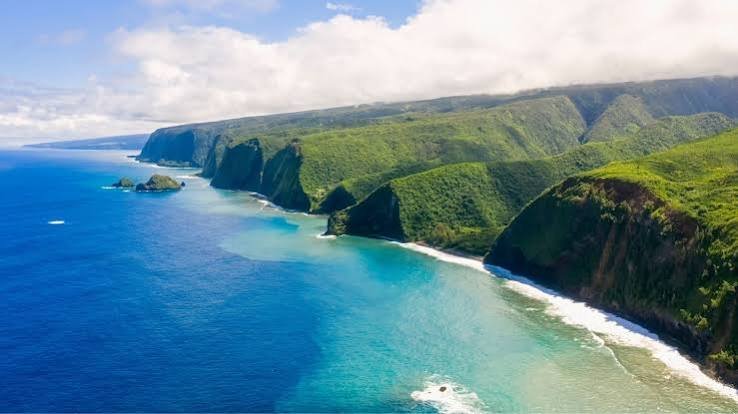
Most people who visit Hawaii go in summer. The flights book up quickly, the resorts fill and the car parks at the national parks are full by nine in the morning. What fewer people consider is that the Big Island between November and March — the period broadly described as its rainy season — is a genuinely different kind of trip, and for certain travellers it works considerably better.
The label “rainy season” does a disservice to what the weather is actually like. The Big Island is nearly twice the size of all the other Hawaiian islands combined, and its weather varies dramatically depending on where you are on it. If you want a closer look at the landscape itself before you decide, the rainforest zone around the volcano looks very different from the sun-baked Kona coast — and that difference is most pronounced in the wet season. Understanding which part of the island you are basing yourself in is the most useful thing you can do before you book.
What the rainy season actually means on the Big Island
The wet season on the Big Island is not like a monsoon. Rain tends to arrive in short, heavy bursts rather than all-day downpours, and it affects the island unevenly. The Kona coast on the western side remains relatively dry even in winter — sunny mornings are common, and the beach resorts along the Kohala strip operate largely as normal. The eastern side, around Hilo and the slopes of Mauna Loa, is where the rain is most noticeable, and it is heaviest in the rainforest zone around Volcano Village near the national park.
That distinction matters because the national park sits inside that rainforest. If your trip is built around Hawaiʻi Volcanoes National Park — the Kīlauea caldera, the lava tubes, the Chain of Craters Road — you should expect rain as part of the experience. The trails are hikeable year-round, the caldera and the lava fields do not close for weather, and the park service keeps the roads in good condition. What changes is the atmosphere: the mist that sits over the caldera on a wet November morning looks nothing like the clear-sky version of the same view, and for many visitors it is more dramatic.
What improves in the off-season
The practical advantages of travelling between November and March are significant. Flights from the mainland United States are cheaper, sometimes considerably so. Accommodation rates drop across the island, and the national park itself is noticeably quieter. The Kīlauea Iki Trail, which in peak season can feel like a procession, becomes a much more personal experience in January. You can walk at your own pace, stop where you want and take photographs without waiting for a gap in the crowd.
Wildlife activity is also worth noting. Humpback whales migrate to Hawaiian waters between December and April, and sightings from the Kona and Kohala coasts are common. It is one of the few places in the world where you can walk through an active lava field in the morning and watch humpbacks breach in the afternoon. That combination does not exist in July, and it is particularly well suited to couples looking for something quieter than peak-season Hawaii — fewer crowds, lower prices, and a pace that actually lets you take the place in.
Packing and preparation for wet-season hiking
The trails inside Hawaiʻi Volcanoes National Park are manageable in the rain, but preparation makes the difference between a good day and an uncomfortable one. A waterproof layer is essential, not a packable rain mac — volcanic terrain is uneven and the wind at elevation can be sharp. Waterproof trail shoes or hiking boots are worth it; the trails are not technically difficult, but wet volcanic rock is slippery underfoot. Trekking poles help if you are not used to uneven ground.
Temperatures at Volcano Village, which sits at around 3,800 feet above sea level, are cooler than the coast year-round and drop further in winter. Evening temperatures in the mid-50s Fahrenheit are not unusual. If you are staying at elevation — which is the sensible choice when the park is your main destination — bring a warm layer for the evenings and mornings. The upside is that sleeping weather at altitude in winter is excellent.
Where you stay changes everything
The Big Island’s size catches visitors off guard. The drive from the Kona coast to the national park entrance is 90 minutes each way under normal conditions. In the rainy season, when you want to be inside the park early — before the weather shifts — or stay late for the lava glow, that commute becomes a real cost. Staying in Volcano Village, a mile from the park entrance, removes it entirely.
Aloha Hale is a privately owned three-bedroom home in Volcano Village that operates as a whole-home rental. The property sits inside a native Hawaiian rainforest of ohia lehua trees — the same species that colonises fresh lava flows inside the park — and the setting is at its most atmospheric in the wet season. Mist in the canopy and rain on the lanai roof are part of what makes it feel different from a hotel room on the coast. A wood-burning stove, a fully equipped kitchen and a private hot tub make staying in on a wet evening less of a compromise and more of a reason to be there.
You are not sharing the trails with tour groups, the property is entirely yours, and the lower nightly rates mean the budget stretches further. A week in Volcano Village in January costs noticeably less than the same week in July, and the experience — early mornings on the Kīlauea Iki loop, evenings by the stove — is harder to replicate when the island is at capacity.
A few things to keep in mind
Some days in the wet season will be fully overcast, and the summit of Mauna Kea — a popular stargazing destination — is more likely to be cloud-covered than in summer. If a clear summit view is the priority, it is worth checking the Mauna Kea Weather Centre forecast before you drive up. The road to the summit also closes more frequently in winter due to ice and snow at elevation, which surprises visitors who came to a tropical island and did not expect to find either.
The ocean on the Kona and Kohala coasts remains swimmable through winter, though surf can be larger on the north-facing shores. Snorkelling at Kealakekua Bay and Two-Step is good year-round, and the humpback whale season adds something to any boat trip you take between December and April. Plan a mix of coast and park days rather than committing entirely to one side of the island, and you are likely to have better weather for both.
The case for going in the quiet months
The Big Island in the rainy season is not the compromise it sounds like. The park is quieter, the prices are lower, the wildlife calendar is at its most interesting and the landscape — particularly around the volcano — looks genuinely different from its peak-season version. For travellers whose priority is the national park rather than the beach, it may actually be the better time to go. If you are considering a stay near the park in Volcano Village, volcanohi.com has availability and booking information for Aloha Hale.