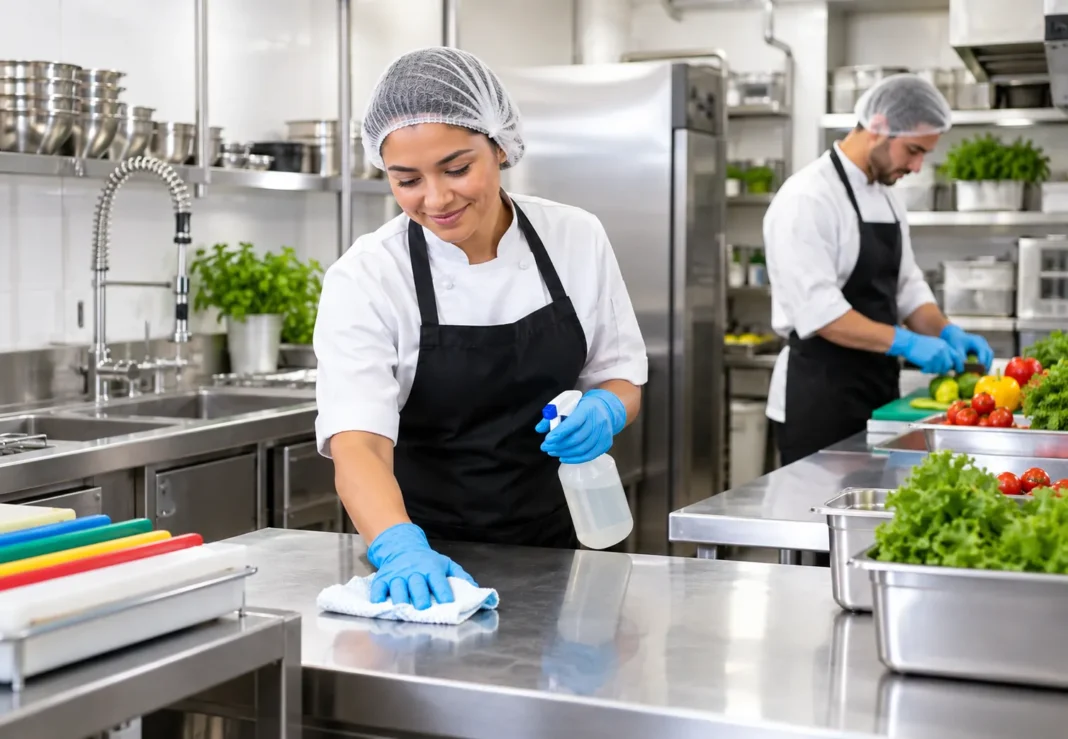
Maintaining pristine hygiene standards across a commercial food establishment is vital for protecting public health, passing official health inspections, and building long-term customer trust. Food prep environments require rigorous, repeatable daily cleaning procedures to eliminate foodborne pathogens and cross-contamination risks. Implementing a comprehensive, daily kitchen sanitation checklist transforms routine hygiene into an automatic, team-wide operational habit.
Personal Hygiene Protocols and Staff Training Standards
A clean food business starts with strict personal hygiene standards practiced consistently by every staff member on duty.
Handwashing Procedures and Personal Grooming
Proper handwashing serves as the primary defense line against microbial contamination in food prep environments. Employees must wash hands thoroughly with warm water and antibacterial soap for at least twenty seconds before handling food items, after handling raw meats, and after completing cleaning tasks.
Dedicated handwashing sinks must remain accessible, fully stocked with liquid soap dispensers, and supplied with single-use paper towels at all times. Staff members must maintain clean attire, wear appropriate hair restraints, keep fingernails trimmed, and remove hand or wrist jewelry before entering food preparation areas.
Health Monitoring and Illness Policies
Establishing clear employee health policies prevents contagious illnesses from spreading through commercial food environments. Staff members experiencing symptoms such as fever, vomiting, or gastrointestinal distress must report their condition to management and remain off duty until fully recovered.
Exposed cuts or skin abrasions on hands or arms must be covered with waterproof bandages and clean disposable gloves before working near food prep lines. Regular staff safety huddles keep hygiene expectations clear and top-of-mind across all shifts.
Food Handling, Temperature Controls, and Storage Hygiene
Proper food handling protocols protect raw ingredients and prepared menu items from temperature abuse and biological contamination.
Monitoring Critical Control Temperatures
Perishable food products must be kept out of temperature danger zones to prevent rapid bacterial growth. Cold storage units, including walk-in coolers and reach-in line refrigerators, should hold food consistently at or below safe operational thresholds.
Kitchen teams must log internal refrigeration temperatures using calibrated thermometers at the beginning and end of every shift. Hot holding units must maintain cooked food at safe elevated temperatures until served, with internal food temperatures verified periodically using probe thermometers.
Preventing Cross-Contamination in Storage Areas
Preventing cross-contamination requires organized ingredient storage across all cold and dry facilities. Raw poultry, seafood, beef, and pork must be stored on lower shelving units beneath ready-to-eat products and fresh produce to eliminate drip contamination risks.
All stored food containers must be sealed tightly, elevated off floor surfaces, and clearly marked with product names and prep dates. Following strict first-in, first-out inventory rotation protocols ensures older stock is used before newer shipments, reducing food waste and maintaining freshness.
Daily Cleaning and Disinfection of Food Contact Surfaces
Food contact surfaces require continuous cleaning and chemical sanitation throughout operating hours to maintain safe prep conditions.
Cleaning Workstations and Cutting Equipment
Preparation counters, cutting boards, and food assembly lines must be cleaned and disinfected between handling different food types, particularly when transitioning from raw proteins to ready-to-eat ingredients.
Using color-coded cutting boards helps kitchen staff distinguish between raw poultry, raw meats, fresh produce, and cooked menu items. Sanitizing solution buckets, maintained at appropriate chemical concentrations, must be kept at every workstation alongside clean wipe cloths for ongoing surface cleaning.
Dishwashing and Warewashing Standards
Proper warewashing eliminates grease residues and harmful bacteria from cooking pots, utensils, and dining dishware. Three-compartment sink procedures require a systematic sequence: scraping food soils, washing in hot soapy water, rinsing in clean warm water, and soaking in chemical sanitizing solution.
Commercial mechanical dishwashers must be inspected daily to verify wash and rinse cycles reach required thermal or chemical sanitation levels. All washed cookware and dining utensils must air-dry completely on clean racks before being stored in enclosed cabinets.
End-of-Day Facility Sanitation and Structural Maintenance
Thorough end-of-day closing sanitation routines leave kitchen environments fresh, secure, and fully prepared for the morning crew.
Degreasing Cooking Equipment and Exhaust Systems
At the end of service, cooking appliances require comprehensive surface degreasing. Griddles, charbroilers, deep fryers, and stovetops must be scraped free of burnt food debris, scrubbed with commercial degreasers, and wiped clean with fresh water.
Exhaust hood baffles, grease traps, and surrounding stainless steel wall splash zones should be cleaned routinely to prevent grease accumulation. Proper grease management reduces structural fire risks and maintains proper ventilation system performance.
Floor Maintenance, Waste Disposal, and Pest Prevention
Kitchen floors accumulate grease splatters, organic crumbs, and moisture throughout daily service shifts. Sweeping floor surfaces, scrubbing tiles with floor degreaser, and mopping with clean hot water eliminates slippery residue and keeps floor drains flowing freely.
All trash containers must be emptied, washed, and fitted with fresh liners before closing. Securing exterior waste dumpsters, sealing structural wall gaps, and scheduling routine rodent control in American Fork prevents nesting wildlife from invading food storage areas. Completing thorough facility walkthroughs ensures all sanitation benchmarks are fully met every single night.