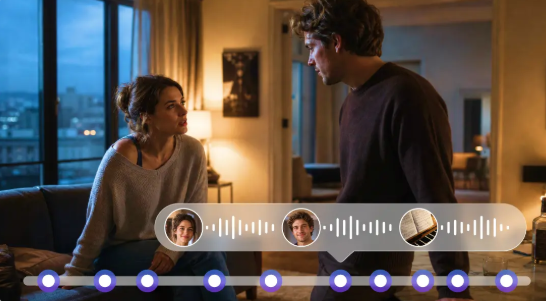
Producing great audio has generally taken recording devices, edit software, understanding of the technology, and a significant time investment. With the coming of AI, all that is being dramatically redefined. It is enabling creators to try out with their sound ideas in a totally different way that is much better for them. Instead of doing every thing manually users can tell a system, through natural language, how to get rid of an undesirable noise or, even better, what sound they expect to be created by a certain method. As interest in AI-generated music and sound effects continues to grow, Dreamina offers tools like Seedaudio 1.5 and Seedaudio 2.0 to help creators explore new possibilities in audio production.
Why Seedaudio 1.5 Is a Great Example
Seedaudio 1.5 has to be seen as a big development stage for AI audio tools. Earlier models often showed a clear pattern, e.g., how users might describe something and how the AI would then generate the corresponding sounds. Therefore, they provided an excellent starting point for users to try different styles, creative testing, and getting the hang of it with time.
Instead of relying on a one-time accurate creation, one can start describing how the sound could be. Gradually, the user can gain insight into what instructions result in what outputs and how those outputs are affected by changes of the instructions. It is just one of the examples showing that AI is getting increasingly sophisticated with a lot of potential still awaiting developers and the public alike.
Why Seedaudio 2.0 Is a Trend
Seedaudio 2.0 is a clear indication of the new path AI will be taking when it comes to audio generation. One way that newer AI systems differ is that they tend to enable more powerful and flexible creative processes so that creators will have a much greater degree of control. In addition to that, they are able to make more of an artistic impression by turning a simple idea into an audio piece.
This will greatly appeal both professional and amateur users who want to make music or sound effects. But the main beneficiaries of this new way of working will be the ones who don’t want to become stuck in the same monotonous routine of the repetitive tasks and focus on the fun creative part of their projects.
About Seedaudio for AI Audio
AI technology for audio creation, nowadays, is accessible not only by musicians and sound studios. Many everyday content creators could benefit from it. A person creating a short promotional video to advertise an app or a physical product for a company can have the need to get the idea and a corresponding sound in order to get the message of the product over.
In addition, a YouTube producer or a podcast maker looking to find a specific atmosphere or background to their video or podcast can look for an AI-generated sound which will be just that.
With tools like Seedaudio it’s possible for such kind of creative people to be quite a lot better at their job, since they can quickly try things out and find the right way without being too deep in the technical side. They can, for example, describe what scene they need for their film and have the music created by AI that’s a perfect fit or they can try different atmospheres until they decide to pick one.
Getting to Know Seedaudio 1.5 Better
The first time Seedaudio 1.5 users experiment with the features, they may not even understand that they are building a new and better AI audio process. Trying out different prompts may teach very good prompting techniques, and even small changes in tone, style, and setting can completely transform the resulting sound. It’s usually the case that learning to prompt a creative AI system comes down to trying things out rather than reading up on the whole thing.
Going Further With Seedaudio 2.0
If you are a creative person working on new AI audio projects, then you’ll probably look to the next generation Seedaudio 2.0 to expand your options. A later Seedaudio generation might be worth trying when your artwork will need a different type of creative workflow or when the user will want to go through the latest functionalities. Nevertheless, it is always going to rely on the creative direction of the user, the features which are actually available on the service, and the requirements for the project.

Why Prompting the AI is Worthwhile?
AI tools only act upon the commands they receive from their humans. A single instruction may be sufficient, but elaborating on an idea may make things clearer for the system and result in more creative outputs. For the purpose of a music composition, users can express to the system what feeling the work should bring out, what environment it’s suitable to, the degree of intensity and even the type of use. You should understand that not every prompt has to be longwinded, and there is no need to say your piece twice.
Creating Video Content With the Help of AI Sound
Anyone creating videos can be a great candidate for the AI-generated audio. The sound in the background can greatly influence the way the audience watches the visuals. For example, the soundtrack for a travel video might go along well with lively music and upbeat tempo, whereas, a documentary video will do fine with simple and hardly noticeable music. Using Seedaudio 2.0 as part of the video content development process will enable the creators to look for the perfect audio companion before finishing the video.
Responsible Creative Use
Creators should also think about what type of the AI-generated audio they create will be used for. On different platforms and for various projects, there could be a number of rules in terms of licensing, using the product, giving proper credit or even other restrictions. It is advisable to have knowledge of the license agreement for the particular tool one will be using before publishing any commercial work. Responsible use will not only let people take the full advantage of AI but also avoid any unnecessary issues in the future.
Final Thoughts
Seedaudio 1.5 and Seedaudio 2.0 have demonstrated that AI audio technology provides a way for individuals to produce sound with the greatest possible technical skill while enjoying the freedom of exploration. The older version may work as a good starting point for experimenting while the newer version can be used when one is ready for pushing the limits and experimenting to a much higher level. In the end one should never just rely on AI but, instead, to combine its features and human ideas, editorial work and creative decision-making.
An imaginative use of AI can make it a useful component of content making in today’s world rather than just adding one more layer to the already crowded tech market.
Frequently Asked Question
Can Seedaudio 2.0 generate voiceover?
Seedaudio is quite a powerful text to voiceover or voice to voiceover tool which can be used in creating and developing video or audio scripts.
What makes an Audio prompt great in AI?
Be creative and imaginative to start with while giving your AI audio prompts and make sure that you add in key elements like mood, style, tone, etc. Then keep testing and optimizing the result.
Will AI audio really replace the work of human professionals in the future?
It’s possible to think so as AI can speed up the process of trying out variations and be an excellent creative assistant but some work in areas of professional sound such as recording, editing, mixing or producing may still need to be done by actual human beings.